
Subscribe!
Ask Chef Walter: Remember, Honor, Feast this Memorial Day, 3pm – Walter Potenza
by Master Chef Walter Potenza, contributing writer
Remember, Honor, Feast
Memorial Day has a built-in tension that no law has ever solved. At its core, it’s a day to mourn and honor those who gave their lives in military service.
Friends:
I was not born here. I came to this country as a man already formed by another culture, another language, another table — the Italian Mediterranean world that shaped everything I know about food and family and the meaning of a shared meal. Memorial Day was not part of my childhood.
I learned about it after I arrived, the way an immigrant learns most things: by watching, by listening, by paying close attention to what people do when they want to say something that cannot quite be put into words. What I saw moved me. Not the cookouts, though I came to love those too, but the parades, the folded flags, the veterans standing a little straighter in the morning air. I understood that instinctively, because I never served in the military — but my father did. He gave thirty-six years of his life to the Italian Army. I grew up knowing what it means to have a soldier in the house: the discipline, the sacrifice, the long absences, the particular kind of pride that has nothing to do with showing off. When Americans pause to honor their fallen on this day, I do not feel like a visitor. I feel like someone who knows exactly what is being honored, and why it matters.
There’s a moment, right before the first guest arrives and the coals start to glow, when the backyard smells like charcoal smoke, cut grass, and something sweeter. It’s a faint feeling of gratitude that’s hard to describe. That’s the scent of Memorial Day. This holiday asks us to do two things at once: to remember and to live. Setting the table in the sun and folding the flag at the cemetery aren’t opposites. They’re just two ways of saying the same thing.
But Memorial Day is more than just a meal in the backyard. All over the country, people mark the occasion by volunteering at veterans’ organizations, attending ceremonies, placing flags on graves, marching in parades, or quietly observing a moment of silence. Whether you hand out water at a marathon, help neighbors clean up a memorial park, or stand with others at the sound of taps, these non-food traditions connect us to the true meaning of the day and invite every American to find their own way to remember.
The Weight of the Day
From Flowers to Federal Holiday
Memorial Day didn’t start with hamburgers on the grill. It started with flowers on graves. In the spring of 1865, as the Civil War ended, people across the country did something natural and human: they walked to burial grounds and placed flowers on the graves of the newly dead. No one organized it or made it a rule. It just happened. In the South, women cared for the graves of Confederate soldiers, and in the North, freedmen and Union supporters did the same. Grief was shared by everyone, even when the country was divided.
The first big, organized Memorial Day event is usually traced to May 1, 1865, in Charleston, South Carolina. There, formerly enslaved Black residents honored Union soldiers buried at a racetrack that had been used as a prison camp during the war. They cleaned the graves, built a fence, and held a ceremony attended by thousands, including Black schoolchildren, Union soldiers, and white missionaries. Historians call this the first Decoration Day, a name the holiday kept for many years.
General John A. Logan, commander-in-chief of the Grand Army of the Republic, formalized the practice on May 5, 1868, when he issued General Order No. 11, designating May 30 as a day to decorate the graves of fallen soldiers. He chose that date deliberately: no major battle had been fought on May 30, and flowers would be blooming across most of the country. The order read, in part, that the day should be observed: “for the purpose of strewing with flowers or otherwise decorating the graves of comrades who died in defense of their country.”
“Let no vandalism of avarice or neglect, no ravages of time, testify to the present or coming generations that we have forgotten, as a people, the cost of a free and undivided republic.” — General John A. Logan, 1868
For decades, Decoration Day was observed primarily in Northern states, while Southern communities held their own, separate days of remembrance for Confederate dead. After World War I, the holiday expanded its embrace to honor American soldiers killed in all wars, not only the Civil War, and the South gradually joined the national observance. By 1967, Congress officially renamed it Memorial Day. The following year, the Uniform Monday Holiday Act moved its observance to the last Monday of May, giving workers a three-day weekend that, in practice, transformed its character forever.
The Living and the Dead
Memorial Day has a built-in tension that no law has ever solved. At its core, it’s a day to mourn and honor those who gave their lives in military service. But because it comes with warm weather and marks the unofficial start of summer, it’s also become a big national celebration: pools open, cookouts begin, and people take road trips or shop the sales.
Some veterans and military families find this mix of celebration and remembrance difficult, even painful. For them, a Monday filled with grilling and cold beer can feel more like forgetting than remembering. In 2000, Congress created the National Moment of Remembrance, asking Americans to pause for a minute of silence at 3:00 PM on Memorial Day. The idea was to help the country balance both the celebration and the seriousness, the feast and the honoring of sacrifice.
If you’re looking for simple ways to honor the day, there are plenty of meaningful options anyone can do, whether alone or with others. Share a story about someone who served, talk with a veteran and listen to their experiences, or write a note of thanks to a military family in your community. Support a veterans’ organization with a donation or volunteer your time, or take a walk through a local memorial, even if just for a few quiet moments of respect. However you choose to remember, your gesture adds to the spirit of the day and helps preserve its meaning for all.
The best way to spend the holiday is the way many American families already do, even if they don’t call it anything special. You go to the parade. You visit the cemetery, the memorial wall, or the veterans’ monument in town. You fly the flag. Then you go home, start the grill, set out the potato salad, and gather your loved ones around a sunny table. Living well and being together is, in its own way, a very American response to loss.
The American Table
What We Eat and Why It Matter
No other American holiday is as closely tied to a way of eating as Memorial Day. The Fourth of July has fireworks, Thanksgiving has turkey, and Christmas has cookies. But Memorial Day is all about the backyard grill, the picnic table, cold drinks in a bucket of ice, and a big spread of summer food that can’t fit in just one dish. It’s a meal built on abundance and generosity, with a table so full it almost groans.
What stands out about Memorial Day food is how truly American it is—not because of pride, but because it’s so diverse and varies by region and culture. What’s on the grill in Biloxi, Mississippi, isn’t the same as in Portland, Oregon. The dishes in South Texas look nothing like those in upstate New York. Still, it all fits together as part of the same national meal.
The Grill: Sacred Center
The charcoal or gas grill is the center of Memorial Day celebrations. In the minds of many Americans—and in most backyards—it’s watched over by someone who takes the job seriously, tongs in hand, carefully monitoring the heat and timing as if it’s an important task.
Hamburgers are the undisputed standard. Ground beef shaped into patties, seasoned according to the cook’s preference, and grilled over direct heat until the outside is charred and the inside juicy, is a staple of Memorial Day cookouts, reflecting an American tradition that began in the late 1800s when hamburgers made their leap from plate to bun, according to History.com. Hot dogs are another popular choice, especially for children, often split, grilled, and nestled into soft buns that become even softer under layers of mustard and relish.
But regional tradition asserts itself powerfully around the grill. In the South, whole chickens and chicken quarters, rubbed with spices and slow-cooked over indirect heat, represent a deep tradition. In Texas and throughout the Southwest, beef brisket smoked low and slow for many hours is the centerpiece that everything else orbits. In the Carolinas, pulled pork with vinegar sauce is the answer. In the Midwest, bratwursts simmered in beer and onions before a quick char on the grill are the beloved standard. Along the coasts, fish and shellfish make their appearance: grilled shrimp skewers, whole fish wrapped in foil with lemon and herbs, lobster halved and set directly on the grate.
- Beef hamburgers and hot dogs — the universal baseline
- Smoked brisket (Texas and the South)
- Pulled pork with vinegar sauce (Carolinas)
- Beer-braised bratwurst (Midwest)
- Spatchcocked or quartered chicken (nationwide)
- Grilled shrimp, fish, and lobster (coastal regions)
- Veggie burgers and portobello mushrooms (an increasingly significant presence). In recent years, plant-based grilling options have expanded, so vegan sausages, meatless hot dogs, and marinated tofu skewers are increasingly appearing on the Memorial Day grill. Grilled corn, stuffed peppers, and salads rich in beans or grains offer allergy-friendly, inclusive options for guests with diverse dietary needs. With so many alternatives available, everyone can find something delicious to pile on their plate.
The Cold Sides: A Study in Regional Pride
If the grill is the center of the meal, the cold sides are its heart. They show up in big bowls and covered dishes, and people argue about them with the same passion they have for sports or politics. No one agrees on who makes the best potato salad, but that’s part of the fun.
American potato salad exists in at least two major factions. The mayo-based version — boiled potatoes dressed with mayonnaise, mustard, celery, hard-boiled eggs, and pickles — is the most widely recognized. Still, its execution varies wildly: some versions are sweet, some are aggressively mustardy, some are smooth, and some use rough chunks of potato.
The German-American tradition produces a warm vinegar-dressed version with bacon and onion, sharper and more austere, that competes fiercely in the upper Midwest.
Coleslaw is the other great battleground. Creamy coleslaw — shredded cabbage dressed with mayonnaise and a touch of sugar — is the American default. Vinegar coleslaw, which foregoes the mayonnaise entirely in favor of a sweet-sour dressing, is particularly prevalent in the South and is the traditional accompaniment to pulled pork. Regional additions include everything from shredded carrots and raisins to jalapeños and mango.
Baked beans, which go back to New England colonial times and even earlier Native American traditions, show up on almost every Memorial Day table. Many people use canned beans, but some families still make them from scratch with molasses, salt pork, and dry mustard, just like their grandmothers did—and for good reason.
Corn on the cob is a symbol of summer: sweet, a bit messy, and best when it’s fresh, eaten with butter dripping down your arm. Macaroni salad, pasta salad, deviled eggs, cucumber salad, and big slices of watermelon round out the table and complete the afternoon.
Dessert and the American Sweet Tooth
Memorial Day desserts are all about red, white, and blue, and people love it that way. The flag cake—a white or yellow sheet cake with whipped cream and strawberries and blueberries arranged in the shape of the American flag—has become a holiday tradition. Every year, millions of families make it, take pictures, share them, and enjoy every bite.
Strawberry shortcake is another favorite: fresh summer strawberries mixed with sugar, served on a biscuit or sponge cake, and topped with real whipped cream. It’s simple and one of the best American desserts. Apple pie is always popular, but especially on Memorial Day. Peach cobbler in the South, blueberry pie in New England, and cherry pie in the Midwest all showcase the country’s love for fruit desserts during the holiday season.
Ice cream is a must. Whether it’s scooped from a carton, made at home, or bought from a truck parked near the parade, it’s the cold, sweet treat that finishes the afternoon.
The Recipe
Slow-Smoked Baby Back Ribs with Bourbon-Brown Sugar Glaze
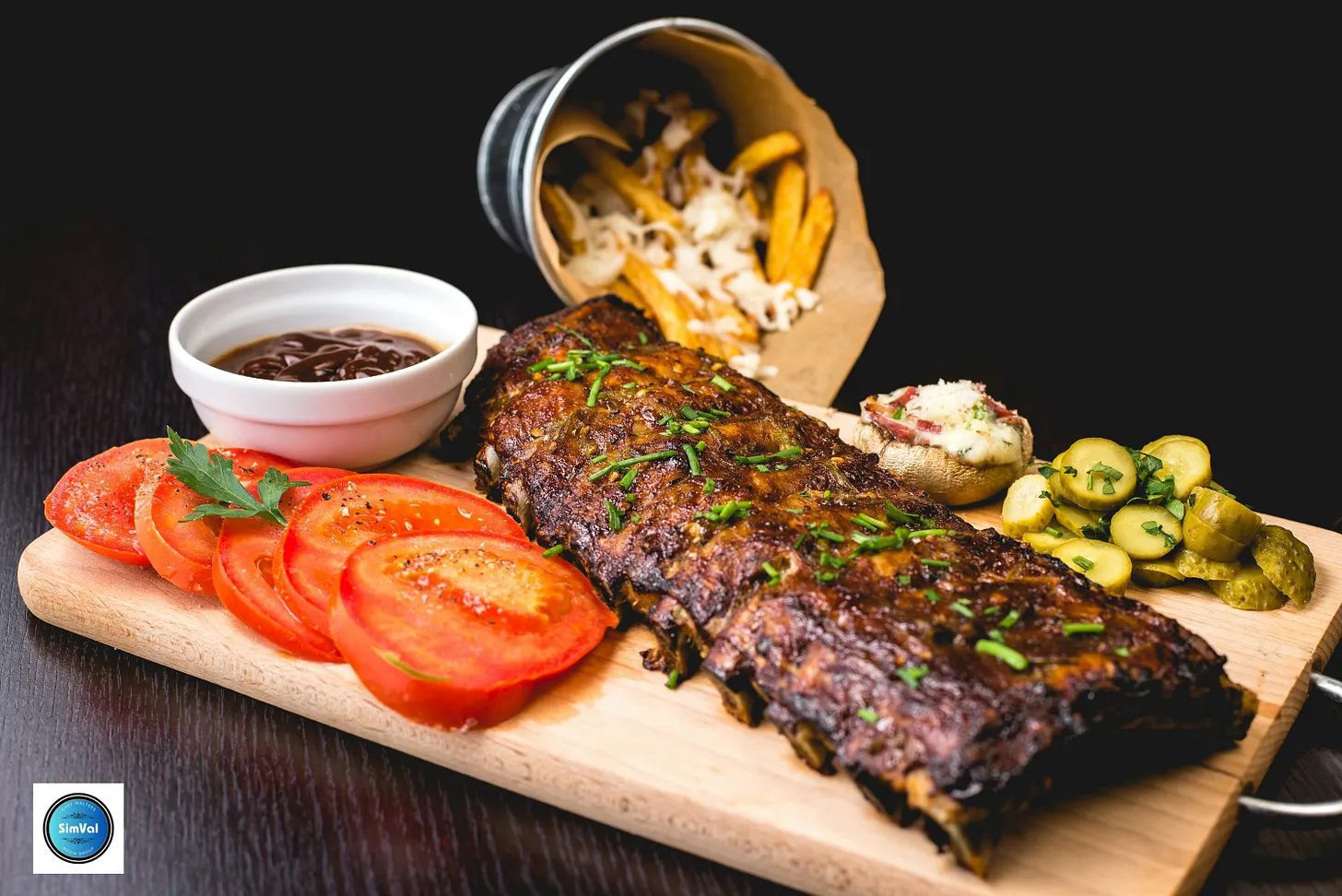
If the hamburger is the everyday hero of the Memorial Day grill, ribs are the showstopper. If hamburgers are the everyday star of the Memorial Day grill, ribs are the main event. They take patience and care, which is perfect for a long holiday weekend. This recipe makes ribs that are full of flavor, tender but not falling apart, and covered in a glaze that caramelizes just right. It’s meant for a crowd, a sunny afternoon, and a meal people won’t forget.f smoke and open heat, two hours wrapped in foil to braise in their own steam, and one final hour unwrapped with the glaze applied. The result is ribs that have absorbed real smoke flavor without losing their structure.
Ingredients (serves 6–8)
For the ribs and dry rub:
- 3 racks baby back pork ribs (about 2–2.5 lbs each)
- 3 tablespoons brown sugar, packed
- 2 tablespoons smoked paprika
- 1 tablespoon kosher salt
- 1 tablespoon freshly cracked black pepper
- 1 teaspoon garlic powder
- 1 teaspoon onion powder
- 1 teaspoon dry mustard
- 1/2 teaspoon cayenne pepper
- 1/2 teaspoon ground cumin
- Wood chips for smoking: hickory or apple wood, 2 generous handfuls
For the Bourbon-Brown Sugar Glaze:
- 1/2 cup bourbon (something decent — you don’t need top shelf, but don’t use something you wouldn’t drink)
- 1 cup ketchup
- 1/2 cup brown sugar, packed
- 1/4 cup apple cider vinegar
- 2 tablespoons Worcestershire sauce
- 1 tablespoon Dijon mustard
- 1 tablespoon molasses
- 3 cloves garlic, minced
- 1/2 teaspoon smoked paprika
- Kosher salt and freshly ground black pepper to taste
Procedure
The day before (or at least 4 hours before cooking):
Prepare the ribs. Lay each rack bone-side up on a cutting board. You will see a thin, papery membrane stretched across the bones — this is the silverskin. It must be removed, or it will prevent the rub from penetrating and will turn tough and chewy when cooked. Slide a butter knife under one corner of the membrane, then grab it with a dry paper towel and pull it off in one long strip. If it tears, get underneath with the knife and start again.
Make the dry rub. Combine all the rub ingredients in a small bowl and mix thoroughly. The brown sugar will want to clump — break it up with your fingers.
Apply the rub. Work the rub into both sides of each rack generously and evenly, pressing it in so it adheres. Don’t be shy. Wrap the racks tightly in plastic wrap and refrigerate overnight, or for at least four hours. The salt will draw some moisture to the surface and begin curing the meat, while the sugar and spices penetrate the outer layer.
On the day:
Make the glaze. In a medium saucepan over medium heat, sauté the minced garlic in a splash of oil for one minute until fragrant. Add the bourbon and let it bubble and reduce for two minutes — if you’re near an open flame, add the bourbon off the heat and return the pan to the burner. Add all remaining glaze ingredients, stir well, and bring to a gentle simmer. Cook, stirring occasionally, for 15–20 minutes until the sauce thickens and coats the back of a spoon. Taste it: it should be sweet, smoky, tangy, and slightly boozy. Adjust seasoning. Remove from heat and set aside. This can be made the night before.
Prepare your grill for indirect cooking. If using a charcoal grill, build your coals on one side only and maintain a temperature of 225–250°F. If using a gas grill, light only the burners on one side and preheat to the same range. Soak your wood chips in water for 30 minutes, drain them, and add them directly to the coals or place them in a foil pouch with holes poked in it over the lit burners. You want a steady stream of fragrant smoke, not a bonfire.
Phase One — Three hours of smoke. Place the rib racks bone-side down on the cool side of the grill (not over direct heat). Close the lid. Maintain your temperature as steadily as possible, adding coals or adjusting the burners as needed. Resist the urge to open the lid constantly — every peek bleeds heat and smoke. After three hours, the ribs should have a deep reddish-brown color, a visible bark forming on the surface, and a faint smoke ring if you sneak a look at the bone end.
Phase Two — Two hours in foil. Remove the racks from the grill. Lay two sheets of heavy-duty foil flat on your work surface. Place one rack in the center, bone-side up. Add a splash of apple cider vinegar or apple juice to the foil before sealing — about two tablespoons. Wrap the rack tightly, crimping the edges to prevent steam from escaping. Repeat with the other racks. Return them to the grill, still over indirect heat. The foil-wrapped ribs will essentially braise in their own juices and steam. This is what makes them tender. Leave them alone for two hours.
Phase Three — One hour with glaze. Unwrap the ribs carefully — there will be a rush of hot steam and accumulated liquid when you open the foil. Discard the liquid (or drink it, if you are that kind of cook, which I am). Return the racks to the grill, bone-side down, over indirect heat. Brush the top surface generously with the bourbon glaze. Close the lid and cook for 20 minutes. Open, brush again. Repeat twice more — three applications of glaze over the final hour, each one caramelizing over the last into a deep, mahogany lacquer.
Rest and serve. Remove the racks from the grill and let them rest, loosely tented with foil, for ten minutes before cutting. This is not optional. The resting period allows the juices to redistribute so they don’t run out the moment you slice between the bones. Cut the racks into individual ribs or two-bone sections. Arrange them on a large platter, brush with one final coat of warm glaze, and set out extra sauce on the side. Serve immediately.
“The best ribs are an act of patience — and patience at a holiday cookout is its own kind of honor.”
A Note on Timing
The whole process takes six hours on the grill, plus time to rest the ribs. If you want to eat at midday, start your coals by 7 AM. For a late afternoon meal, you can start at 9 or 10 AM. You can make the glaze and rub the night before, and letting the ribs rest overnight in the rub makes a big difference. Planning and cooking on the day will be easy.
If you don’t have a grill or outdoor space, you can still make great ribs by using your oven. After applying the rub and letting the ribs rest, place them on a rack set over a baking sheet, cover tightly with foil, and bake at 275°F for about three hours. Then remove the foil, brush with glaze, and roast uncovered at 425°F for 20–30 minutes, adding more glaze every ten minutes until sticky and caramelized. For a smokier flavor, add a few drops of liquid smoke to the glaze, or briefly broil the ribs at the end for a bit of char. With these adaptations, everyone can enjoy Memorial Day ribs, no backyard required.
Wine and Beer Pairings
A cold, slightly hoppy American lager is the classic drink to go with barbecue, and it’s always a good choice. If you like craft beer, try a smoked porter or a malty amber ale; they go well with the smoky ribs and bourbon glaze. For wine, zinfandel is a great match for barbecue, with its fruity flavor, a bit of pepper, and just enough tannin. A chilled, dry rosé from Provence is a lighter option that also works well.
Festive Non-Alcoholic Drinks
For those who prefer non-alcoholic beverages, classic iced tea served sweetened or unsweetened over plenty of ice is a refreshing tradition on Memorial Day. Fresh-squeezed lemonade, especially when poured into a tall glass and garnished with a lemon wheel or a few berries, feels instantly celebratory. You can also offer sparkling water with lime, fruit punches made with seltzer and citrus slices, or pitchers of homemade cucumber-mint water to keep guests cool and included in the toast. No matter what you drink, make it cold, festive, and easy to share.
Remember at 3:00 PM. Then feast well and give thanks.
___
Sign up HERE for RINewsToday daily newsletter – and look for my column this SUNDAY!

Meet Chef Walter!
There is a constant, recognizable thread in the career of Walter Potenza to elevate the level of Italian culinary culture in the United States. Besides his unquestionable culinary talent and winning business perspective, Chef Walter has been a relentless educator with passion and knowledge who defeats stereotypes. His life, career, and values are a model, an example to follow by any chef of Italian gastronomy working outside Italy.
Chef Walter appears regularly on National and International Networks such as Food Network, ABC, CBS, NBC, RAI, FOX, and Publications such as NY. Times, Washington Post, Wall Street Journal, Food & Wine, Saveur, Gourmet, and several Italian media outlets. And now – RINewsToday!
Chef Walter, thank you for the reminder to pause at 3pm and for the history of why we celebrate this holiday. I enjoyed reading your article, and I will share your recipe with my husband. (he’s the cook in my family.)
Thanks again!
P.P