
Subscribe!
May Day: In a Loud World, a Quiet Choice
By Nancy Thomas, publisher
May 1—May Day—has always carried a quiet contradiction.
It’s striking how few people know the history behind the days we mark—where they came from, or what they were meant to celebrate.
And yet, in small ways, we still live it.
You’ve probably already done your first lawn clean-up. Maybe you’re mapping out a garden—flowers, vegetables, or a mix of both—a quiet nod to the Victory Gardens of another time.
Victory Gardens—planted at homes, schools, and in communities during World War I and World War II—helped ease food shortages, reduce strain on transportation, and boost morale. By 1943–1944, more than 20 million gardens were producing an estimated 40 percent of the nation’s vegetables.
Today, the idea still resonates: fresher food, lower costs, and a stronger sense of community.
Windows are open(ing). Closets are being cleared. There’s a sense, however subtle, that things are starting fresh again.
That’s May Day, too.
A tradition worth remembering
Long before it carried any political meaning, May Day was a celebration of spring—of renewal, of community, of people coming together after a long winter.
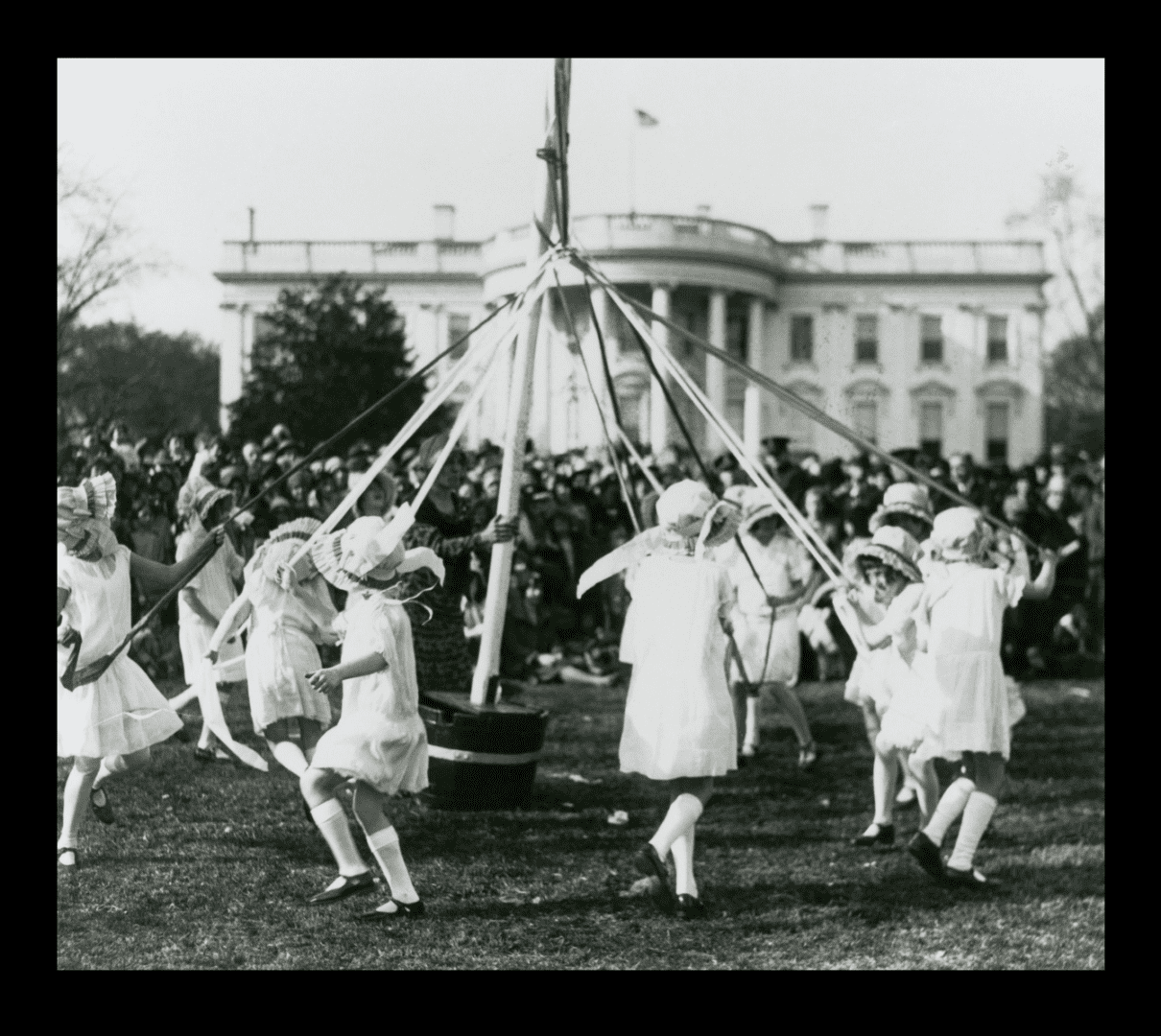
In villages across Europe and later in America, the day was marked with flowers, music, and the raising of the maypole. Children danced in circles, ribbons weaving together as neighbors gathered to mark the changing season.
That spirit carried into traditions like leaving May baskets on doorsteps or simply visiting with neighbors. It wasn’t about spectacle. It was about connection.
A Rhode Island tradition
Here in Rhode Island, May Day found its own expression in the May Breakfast. Some will be happening today – some later this weekend.
In church halls and community spaces across the state, people gathered early—sometimes at sunrise—for plates of pancakes, eggs, johnnycakes, baked beans, and coffee. Many of these breakfasts date back generations, rooted not only in the arrival of spring but in Rhode Island’s early declaration of independence in May 1776.
They are simple events. You stand in line. You sit at long tables. You talk.
And in that simplicity, something important happens: people connect.
A different thread
Over time, May 1 also took on another meaning. Following the Haymarket Affair, it became associated with workers’ rights and the push for fair wages and safe working conditions.
That history still echoes today, in different ways and in different places. It’s part of the story—but not the whole of it.
A moment—and a choice
Scroll through social media and you’ll see all kinds of expressions tied to the day—including demonstrations and calls to action tied to national politics.
In one clip, a lone protester stands on an overpass (illegally) in Cranston promoting a May Day demonstration.
Doin’ her thing. “Showing ‘them'” – unclear just who they are.
It’s a reminder that we’re all capable of both—of creating something meaningful, and of letting frustration take over.
Which one shows up is a choice. Our choice.
A day about people
Whether it’s sharing a table at a May Breakfast, planting something new in the yard, or simply crossing paths in the course of a day, May 1 has always been about people.
About connection. About community. About how we show up—not just in public, but in how we treat each other when it matters most. Because today – how and what we do – becomes part of the permanent record.
We all need to cool it.
May Day is a good day to stand your ground—and make your choice.