
Subscribe!
Cranston Budget Rejected by Council — A Fiscal Standoff With Deeper Roots and Urgent Need to Move Forward
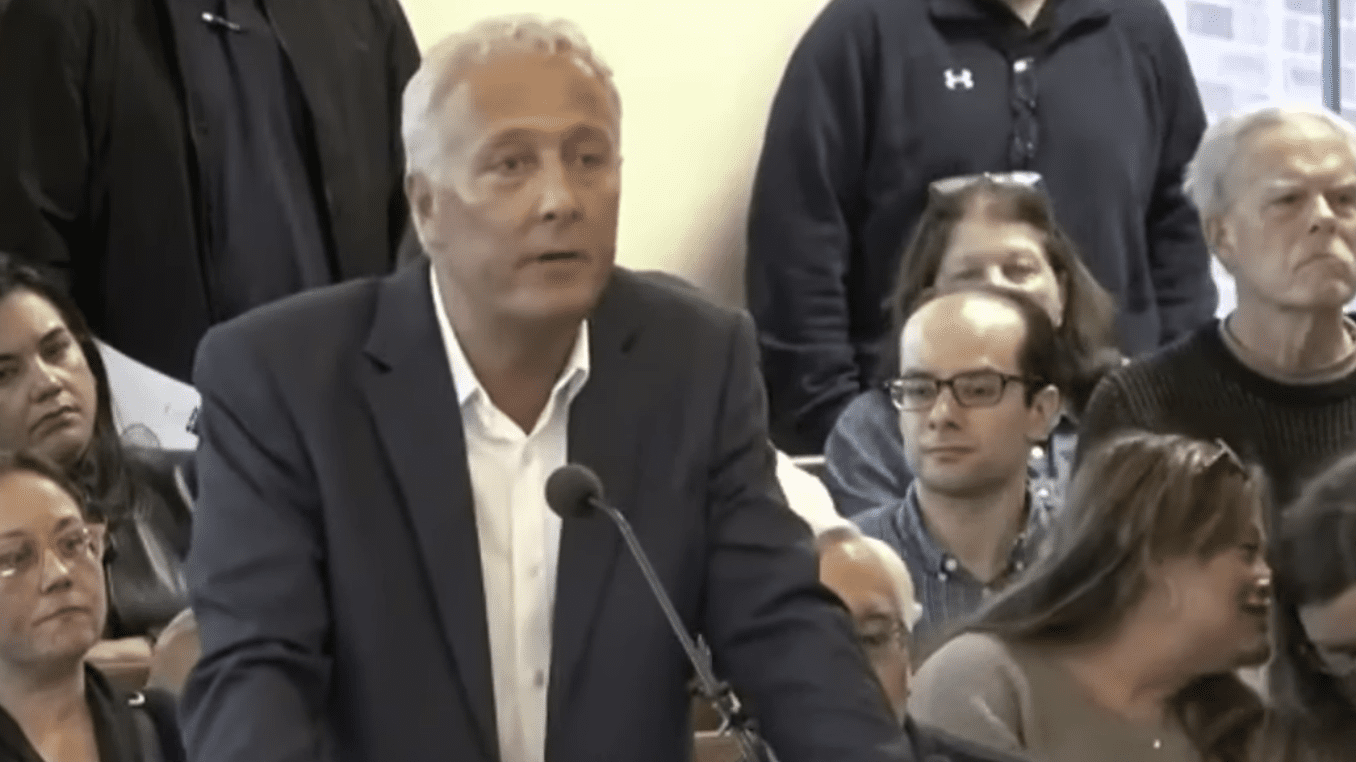
Photo, top: Chris Mansfield, Chief Executive Officer of the Comprehensive Community Action Program (CCAP) – testified about a proposed zero funding of Head Start, even with a 7.4% increase
Cranston’s City Council has unanimously rejected Mayor Kenneth Hopkins’s proposed budget, which was built on a roughly 7.4% property tax increase, sending the plan back to the administration with a rapidly approaching May 15 deadline to adopt a spending plan. The vote followed a tense and, at times, heated hearing and leaves the city without a clear path forward to close what officials estimate is a deficit approaching $10 million. While the immediate focus has been on the size of the proposed tax increase, the debate revealed a deeper and more complex fiscal challenge that may not be resolved through a single budget decision.
The rejected proposal was not based on maintaining existing services. According to details presented during the hearing, the budget included the elimination of funding for Head Start and zero funding for part of senior services and economic development, while other senior services appear to remain intact. Even with those reductions, and others, the administration projected the need for a 7.4% increase to balance the bare-bones budget. The issue facing Cranston is not simply whether a tax increase of that size is acceptable, but whether the city can realistically close its budget gap without it, given that targeted cuts have already been incorporated into the plan.
A central factor behind understanding the current deficit is the expiration of federal relief funds provided under the American Rescue Plan Act. Like some other municipalities, Cranston used those funds over several years to stabilize its finances and offset operating costs. At one point, ARPA funding contributed millions of dollars annually to the city’s budget. With that support now exhausted—dropping from roughly $7 million in the last year to zero in the next —the city is left to absorb those costs within its regular revenue structure. The resulting gap has the appearance of a sudden shortfall, but in reality reflects expenses that had been temporarily covered by one-time federal money.
While that use of ARPA funding has not become a central point of public contention, Maria Bucci of the Cranston Democrat Committee sharply criticized the administration’s approach, arguing that it created the very structural deficit now confronting the city. “From his very first budget, Mayor Kenneth Hopkins built a structural deficit into Cranston’s budget, using one-time federal COVID money to fund ongoing expenditures,” Bucci said. “Not once did he work to curb costs or find new revenue streams to offset. Instead, he kicked the can down the road while misleading the taxpayers about the coming fiscal cliff. A cliff over which he’s now driven the city over completely.” City officials have maintained that the use of ARPA funds was permitted under federal guidelines and was widely employed by municipalities across the country to prevent layoffs and tax spikes during pandemic times, but the long-term impact of that strategy is now at the center of the debate.
Talk of cuts – no real talk of revenue – It was obvious in that all of the public testimony, City Council discussion, and even the Mayor’s words, there has been little talk of bringing money IN to the city. As a matter of fact, one department charged with doing that – Economic Development – which was funded with not much more than a salary for one person, has been mentioned widely for – elimination.
The rejection of the budget has created a narrow and complicated set of options. The proposal now returns to Mayor Hopkins, who can revise and resubmit a new plan with a different mix of spending cuts and revenue assumptions. The council could reconsider a modified proposal, but the divide over the size of any tax increase remains significant. Complicating matters further is the role of the state. Any increase above Rhode Island’s 4% tax levy cap for general operations would typically require additional authorization, yet legislative leaders have indicated they are unlikely to act without a formal resolution from the City Council on the bill submitted by Rep. Chippendale at the request of Mayor Hopkins, acting as a place holder. That leaves Cranston in a difficult position: the council has rejected the proposed increase, while the state is unlikely to intervene without local support, effectively creating a stalemate with no immediate, clear path forward.
Beyond the current budget cycle, the city is also facing longer-term structural pressures that limit its flexibility. Approximately 55% of Cranston’s budget is tied to education, meaning that more than half of its spending is concentrated in an area influenced by contractual obligations, state mandates, and costs that are not easily reduced in the short term. At the same time, the city is dealing with significant school infrastructure needs, including HVAC system replacements and roof work across multiple buildings. These types of capital projects, often financed through borrowing, can translate into long-term debt service obligations that place additional pressure on future budgets, even when partially offset by state reimbursement.
Taken together, the elements of the current situation point to a broader fiscal challenge. And legal conundrums. The loss of federal relief funds has exposed a structural imbalance that had been temporarily managed. The proposed budget already incorporates targeted program cuts, yet still requires a substantial tax increase. Large portions of the budget are tied to costs that are difficult to adjust quickly, and additional capital needs are emerging that will require funding in the years ahead. The debate over the 7.4% increase may be the immediate flashpoint, but the underlying issue extends beyond a single year’s budget and reflects longer-term financial pressures that are unlikely to be resolved quickly.
With the May 15 deadline approaching, the timeline for resolving the impasse is tightening. If a budget is not adopted, the city would be forced to operate under constrained spending conditions while financial pressure continues to build. While state intervention remains a possibility in severe circumstances, for now, Cranston faces a critical period in which decisions made—or not made—will determine not only the outcome of this year’s budget, but the direction of its finances in the years ahead.
Here is a link to the special Cranston City Council meeting held last night to a full City Council room – at times over 200 people were watching the live YouTube feed as well:
Past RINewsToday’s story on Cranston Budget:
Cranston’s Budget Crisis: Distractions, Politics — and the Bills Come Due
The tax payer burden is overwhelming and pushing people out of their homes….an increase would in fact force the sale of homes and put single women at further risk to maintain any form of dignity of a home owner. Pay checks are not keeping in tune with inflation and I cannot manage any more of a tax burden.