Subscribe!
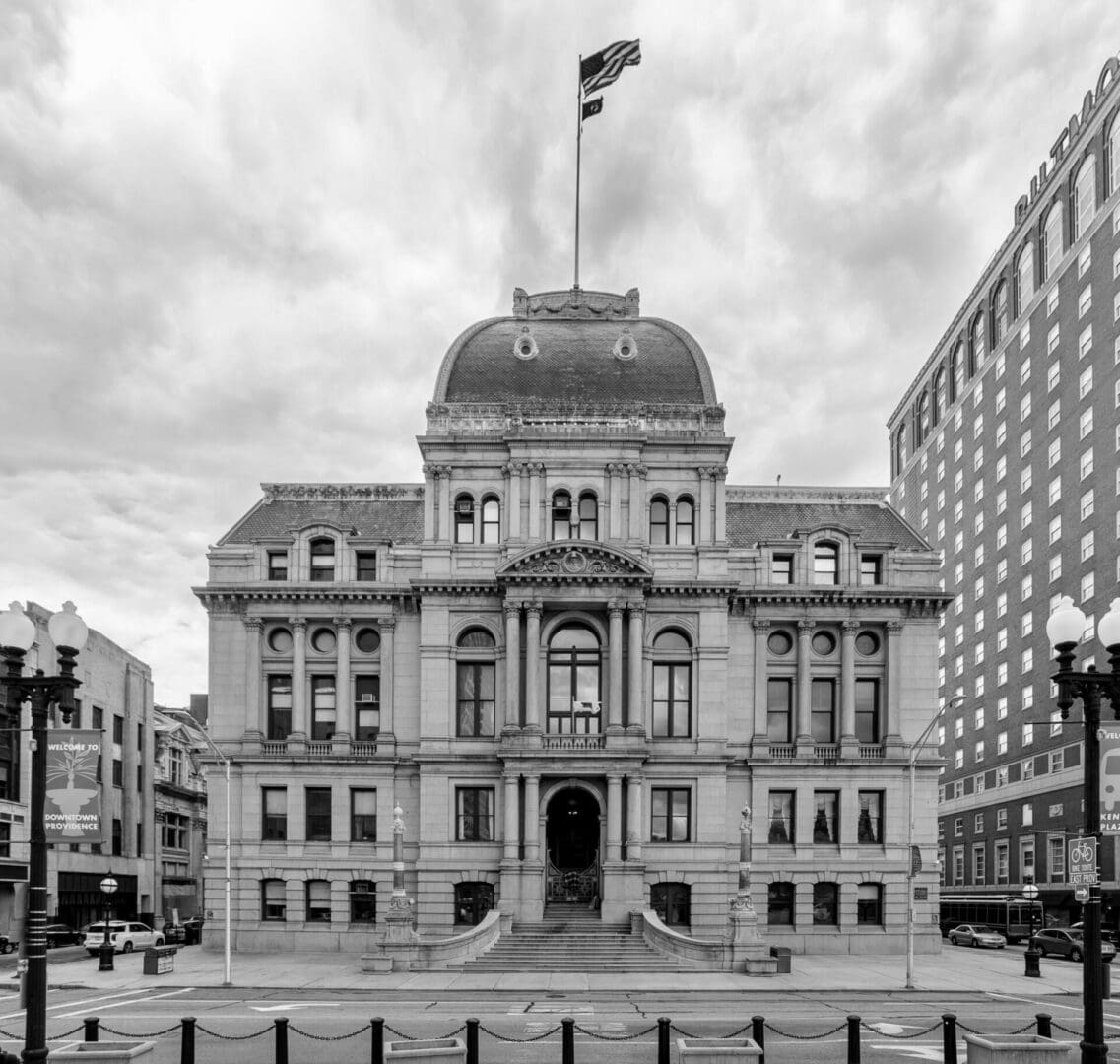
VIDEO: Providence Mayoral Candidates Take the Stage at Brown – Steve Ahlquist
This article, in its entirety, is shared with permission of Steve Ahlquist. SteveAhlquist.news:
“Candidate forums like this one are an important part of our Democratic process as they facilitate open dialogue and provide members of our community an opportunity to learn about the candidates.”
Brown Votes, “a student-led, university-wide, nonpartisan initiative that promotes voting and civic engagement at Brown and beyond,” held the first candidate forum for the 2026 Providence mayoral race on the Brown University campus on Wednesday. Attending the forum were Providence’s incumbent Mayor Brett Smiley, State Representative David Morales, Mayoral candidate Michael English, and Mayoral candidate Allen Waters.
“This forum is part of our ongoing efforts to keep the Brown community and the greater Providence area informed and engaged with upcoming elections,” said Rosie, a student with Brown Votes. “We hope that over the course of the event, you learn more about each candidate and their vision for the city. Candidate forums like this one are an important part of our Democratic process as they facilitate open dialogue and provide members of our community an opportunity to learn about the candidates running for office. By providing a nonpartisan platform, Brown Votes is offering these candidates time to articulate their visions and policies to voters.”
The moderators were Brown University students Alissa Kraus and Nihil Suthy. Each candidate had one minute to answer the 16 questions, the last few suggested by audience members.
Here’s the video and transcript (edited for clarity) from April 22, 2026
Left to right: Mayor Brett Smiley, State Representative David Morales, Mayoral candidate Michael English, and Mayoral candidate Allen Waters ©2026 Adam Testagrossa (with permission from Steve Ahlquist)
Alissa Kraus: We will begin with opening statements. Please introduce yourself and tell the audience why you are running for Mayor of Providence.
Providence Mayor Brett Smiley: Thank you to Brown Votes for organizing this, the very first candidate forum of the election cycle. I’m very excited to talk about the future of our great city. Before we get started, I want to acknowledge that I’m sorry that this campus had to go through what it had to go through in December, but know that the City of Providence is and will continue to be fully behind you. As we think about this upcoming election, I think all of you know that I’m the mayor, but maybe you don’t know my full background. I live right around the corner on Hope Street with my husband, Jim, who’s with me here tonight.
Before serving as mayor, I had a chance to help elect great Democrats and serve great Democrats in various offices. When I took office, I found a city with rising violent crime, underinvestment, and too many priorities that had been pushed off due to an unstable budget. In the last three and a half years, we’ve brought violent crime down 90%, made key investments in parks and critical infrastructure, and stabilized the city budget with the expiration of federal funds. I’m confident that over the next four years, we can continue that progress…
Representative David Morales: Hi, neighbors. I’m running for mayor because I love our city. And I know that together we can build a Providence all our neighbors can afford and feel safe calling home. I’m the proud son of a single immigrant mom and a lifelong renter. I understand the challenges our working families face because here in Providence, we’re a tight-knit community that looks out for one another, and we deserve the same care from our city government. As our next mayor, I’m committed to capping rent increasesour working families can stay safely housed; to working with our school board and teachers on the front lines to improve the quality of education that our students receive; and to direct the City Solicitor’s office to use every tool at their disposal to hold fascist ICE agents accountable when they terrorize our communities, because when we address those issues, that’s how we build a Providence for all.
Michael English: Thank you for letting us have this debate tonight. I’m deeply sorry that everybody had to go through what they went through in December with the shooting. We need to create a plan to make sure that doesn’t happen again, ever, not only at Brown University but also at Providence College, Rhode Island College, and anywhere else in Rhode Island. We need to be ready and set to stop anything.
I started running because my brother was killed on North Main Street and left to die on the side of the road after he served as a United States Marine. I didn’t realize how many people were either victims of hit and runs or other types of crimes against the homeless or mentally ill, because my brother had some mental health issues from the military.
Bad data are in, bad data out. We’re down on crime, but is it that we’re down or that crimes are just not being reported?
Allen Waters: I’m a native of Providence, a fourth-generation resident. My grandfather, Reverend Allen Waters, came to Providence in 1905. Providence was one of the richest per capita cities in the nation. We have declined greatly. We need a change in this city. We need to improve how we’re governed. And quite frankly, after many decades of the same political party, now and then, we need a break.
I went to Classical High School and the University of Rhode Island. I’m the father of five children. I have what I call life experience. What we really need are leaders in the community who help raise people’s hopes, more than just selling it.
Nihil Suthy: As mayor, how do you plan to address the lack of affordable housing in Providence? What tools and strategies do you support?
Representative Morales: In our city, rents are skyrocketing, and our neighbors are being priced out of Providence because it’s becoming too expensive. I’ll never forget speaking with a working mom in Lower South Providence who told me the rent for her two-bedroom apartment had jumped from $1,400 to $2,000. And that’s become the norm in our city: Working families struggle as rent increases serve as eviction notices. And I think back to my childhood, when my mom and I would be forced to couch-surf between leases when it became too expensive. And I proudly support the city council’s proposal to cap rent hikes at 4% a year, and I find it. I find it absolutely shameful that during this time of need, we have a mayor who would veto such a measure.
That being said, we can walk and shoot them at the same time. I support developing new, affordable housing that all of our neighbors can call home because if you want to live in Providence, you should be able to afford it.
Michael English: I look at this a little differently. I don’t believe in a cap on rent control. I believe in a free market. However, I believe the City of Providence could designate one local high school as a campus for grades 8 and up, freeing up some of the lower grades. It would also free up many buildings. If you made it where Central is and made one campus for a high school from eighth to 12th grade, you can change Hope High School into affordable living, owned by the City of Providence, and have that whole property be built up to where we can rent and have that rent go back into the school department and fund that as it makes a profit over the years. This way, we can hit two things at one time, rather than making the private sector.
I see Ireland has rent control. Their rent is outrageous. Other places are rent-controlled, and it’s outrageous…
Allen Waters: One of the things we don’t talk about in this city, maybe because it’s the type of city that we are, but if we have 40,000 rental units, we also have a lot of people who live in this city to make it overpopulated. We have a lot of illegal alien population. We don’t know exactly what that number is because it’s hard to get a count, but if it’s 10,000-20,000, it’s probably more like 20,000 or 30,000. Maybe 10,000 of those people who need a home are also in the marketplace, and it creates a lot of demand. So, on the one hand, we’re a sanctuary city, and we’re inviting people who didn’t fill out the paperwork, but also we want to have rent control. We have people saying one thing and then saying another, and creating a big problem. My solution is that we need a lot of cooperative housing, and that’s what I support and will work to achieve.
Mayor Smiley: Housing affordability is one of the most pressing challenges facing our city. I know that far too many of our neighbors are struggling to either pay the rent or buy their first home here in Providence, but it’s driven. The underlying cause is a housing shortage, which is why I’ve been focused on housing production over the last three years. That’s the first and most important thing we can do to bring down the cost of housing here in the city. In the last three years, we’ve built 2000 new units, over 20% of which are permanently subsidized affordable. Providence is truly leading the state and leading the way. On a per capita basis, we’re building more housing than New York City and Boston.
We’re also making sure that as we take a step forward with new housing, we’re not taking two steps backward with old affordable housing losing its affordability. We’re investing in that as well. At the same time, we’re providing emergency rental assistance and no-cost eviction defense to ensure that tenants aren’t taken advantage of by unscrupulous landlords.
Alissa Kraus: How do you plan to support and strengthen Providence public schools?
Michael English: As I said in the last conversation, I believe we make it a high school that’s from eighth to 12th grade. That means one entrance for all the high school students, getting rid of [the idea that] this is the rich school, this is the Port school, this is the Black school, this is the Jewish school. It’s one high school for the whole City of Providence. We’re not that big of a city. We could bus them all in and make sure every kid has the opportunity to do any program the city offers, since it’s all on the same campus. That [campus] might be two buildings, three buildings. That’s not the point.
It [will be] where all the students get to see each other every day. And people don’t have color in their minds. They don’t have religion. They don’t have culture. Every student is just another student, and they get to learn from each other. We don’t have that in the City of Parvative. We should. We are separating kids, and I don’t understand why.
Allen Waters: Providence is a minority-majority city. 40% Hispanic, 60% non-white, yet our Providence public schools are only teaching our students 15-17% at grade level when they are tested. That’s a disaster. This has been going on for too many decades. Without an education, you’re not going anywhere in this world. Therefore, we are guilty in the City of Providence of destroying the human capital potential of thousands of students, over and over again. How can we raise the bar? We have to go back to the basics. We have to stop what’s called “woke education.” We need to get back to the basics. We need to take those laptops away. I’m from Classical High School, 1972. We need to improve the conditions across the board. As the new mayor, I will make that happen.
Mayor Smiley: The State of Rhode Island’s been running the Providence Public Schools for seven years now, and it’s time to take our schools back into local control. I’ve been fighting for several years now and hope to bring our schools back as early as this summer. When we do so, I want to maintain the progress that we’ve made on early childhood education. Providence is now the only community in Rhode Island that has universal access to pre-K.
We need a relentless focus on third-grade reading to ensure that, at the elementary school level, we’re teaching people to read so they can use their reading skills to learn throughout the rest of their educational careers. We’re also making tremendous progress on rebuilding or renovating every school building by 2030. With that comes a big change: we effectively eliminate middle schools and have pre-K to 8 schools so that we can make progress at the middle school level.
At the high school level, we need to make sure that our students are ready for both careers and college, and continue to add career pathway options so those who find their interests matched with high-wage jobs can pursue them.
Representative Morales: While our families shouldn’t have to worry about sending their kids to our Providence public schools, that’s been the reality for decades. And while there’s been recent discussion about transitioning our schools back to local control, we have to be serious about addressing the gaps that have gotten us here in the first place, because right now we have far too many students, especially multilingual learners and special education students, who are not receiving the support and services that they need in the classrooms. Next year, I’m committed to providing the school board, the district, and most importantly, our teachers, students, and families with the resources they need to design a budget and a staffing plan that guarantees smaller classroom sizes, more multilingual educators, and family engagement coordinators, because that’s how we support the social, emotional, and academic needs of our students.
Nihil Suthy: How do you plan to address and improve public transportation and transportation safety more broadly in Providence?
Allen Waters: I have taken the bus this winter. I had a car problem, and on a Saturday, it took me almost two hours to get from my house in the West End to East Providence. In Kennedy Plaza, I realized how important public transportation is. Now, of course, it’s a big state issue, and we have to secure proper funding for it, but I know how difficult it is to get around without it. I fully support public transportation, and we have to think of different ways people can get around at the best possible cost.
Mayor Smiley: The full range of transit options and mobility opportunities for the City of Providence is critical. When the state threatened to cut RIPTA (Rhode Island Public Transit Authority), I was at the State House using the city’s full weight to try to advocate for proper funding to restore the cuts. RIPTA’s a state agency. It’s not a city agency, but many of our residents depend on it, which is why we fought for full funding.
The state did make cuts. We need to restore the remaining cuts, but this deficit mindset shouldn’t limit us. We need to do better. We need to have a transit system that works for everyone. If you’re working the third shift, RIPTA doesn’t work well for you. In many corners of our city, RIPTA isn’t a great solution, and we need to do better, but there’s more than just RIPTA. We also need to continue to fully implement our transit master plan, including building out our bike network.
Since I’ve been in office, we’ve added a mile of bike lanes and are continuing to execute that plan, while also focusing on pedestrian safety, because there are a lot of walkers in the city. We continue to improve access and make tons of sidewalk repairs to make it safer for walkers as well.
Representative Morales: We should be a city where connectivity is our strength. Providence is a city of neighborhoods, yet we’re not connected by public transportation, much less any other form of infrastructure, such as connected bike lanes or sidewalks that are safe for pedestrians. During my six years as a state representative, I fought to ensure that we maximize state aid for our public transportation system. And unfortunately, there have been times when we’ve fallen short and have seen cuts that have impacted our state agency. These are the moments when the city needs to intervene and demand that RIPTA be a better partner. We can have a circulator bus system, as you see in other parts of the country, like Maryland, Baltimore, where they’re able to connect neighbors from neighborhood to neighborhood. We cannot waste federal funding to remove a bike lane on South Water Street; instead, we should be focused on preserving and expanding our bike networks.
Michael English: I have taken the bus many times to go to work. Sometimes the car is broken. Sometimes money was tight; I didn’t have a car, and the bus was needed to get to work, bring the food home, and pay the bills. I get that, but also having a son and daughter, I’m petrified to get on the school or city bus [because] they get intimidated while [at] the bus stops. We need to create a safer environment for our kids so they can use these buses. They’ll use them more, [and then we] wouldn’t have cutbacks because there’d be a lot of participation. Right now, we’re not having kids or middle-aged people use the bus systems because they’re fearful of it, and it’s sad.
Alissa Kraus: 48% of the land in Providence cannot be taxed due to nonprofit government ownership and tax-exempt status, including Brown University. As mayor, how do you plan to manage the city’s budget within those parameters?
Mayor Smiley: I have managed the city budget in those parameters and have now managed three and introduced the fourth balanced budget in my time. One of the first, and I think greatest accomplishments in my administration was renegotiating the agreements with Brown and the other three private universities in the city. Yes, the colleges should be contributing more, but it is also the most generous agreement between colleges and the city anywhere in the country, so much so that mayors from around the country called me and said, “How did you get what you got? Because we need the same in our cities as well.”
We have also accommodated the expiration of federal funds. When I took office, the city was relying on one-time federal pandemic relief funds, and now we have been able to accommodate the loss of that money while still managing this budget day in and day out.
This is a hard job, and it takes experience and leadership, particularly expertise in managing a city with an underfunded pension system and a large tax-exempt tax base. I’ve been doing it for three years, and I’d like to do it for four more.
Representative Morales: If we’re serious about investing in more affordable homes and improving the quality of our public schools, then we need to be ready to make those investments, so we can build revenue in our city without being overly reliant on residential property taxes. That’s why our administration would be committed to introducing a city budget that holds the corporate polluters near the Port of Providence accountable by taxing them at a higher commercial rate. We will ensure that we implement our vacancy tax on the empty storefronts in downtown and on North Main Street. We’re going to ensure we have a high transaction fee in place whenever big real estate companies like Strive Realty try to buy up more homes in our communities, and we’re going to have a Department of Inspections and Standards that enforces fines and penalties against absentee landlords with serious code violations. That’s how we build revenue in our city without being overly reliant on property taxes.
Michael English: From what I understand, the Brown deal was $20 million, but the majority of it is paid by the taxpayers of the State of Rhode Island, not just the City of Providence, and it’s only about $7 or $8 million we’re hoping to get from Brown University. That said, there are things we can do, such as imposing fines. If students stage riots like the one at Providence College, the schools and the students who rioted should be fined. We don’t sit there trying to collect money for the extra attention a school brings. When ambulances or cops are needed, those are the times we should fine the school and say, “We need to be compensated to fulfill our needs to the city taxpayers.” It’s not every day, but there are a lot of times that this will play a part in Rhode Island, or if they’re doing health, restaurants, whatever, and their code isn’t right, you fine them, you get money elsewhere, not just from taxes.
Allen Waters: Payment In Lieu Of Taxes [PILOT]. The nonprofit community, especially the universities, has benefited from our city, especially as many of our businesses have moved out. But in the Waters Administration, we’re going to keep taxes low. We’re going to try to build and attract more businesses, more private businesses, so that they can pay taxes, but we also want to make sure that these nonprofits, such as Brown University, are not taking advantage of our city anymore. Continually creeping, creeping, taking more property off the rolls and going into these agreements – We have to find a better way, and since I believe in free markets, strong businesses to grow Providence back. This is the type of thing I will be focused on.
Nihil Suthy: Food insecurity remains a significant issue in Providence, with an estimated 20% of residents depending on SNAP or other forms of food assistance. What do you plan to do to address food insecurity in Providence, given federal cutbacks?
Representative Morales: First and foremost, we’re going to ensure that all our food pantries are well-equipped to care for our neighbors. In the fall, amid a federal government shutdown when SNAP benefits were being denied, our communities stepped up for one another. Our food pantries had volunteers and donations to ensure they had the support staff needed to process the number of folks coming in to seek food.
We’re going to empower our libraries, places of religion, and any community organization that wants to support these efforts, while ensuring that we don’t have any food deserts in our city. I give a lot of credit to America’s Food Basket on Broad Street, which resolved what was once a food desert on the south side.
We can work towards having more opportunities for fresh produce and local grocers to call Providence home. We’re going to guarantee that, in our next proposal to the Providence Place Mall, regarding our tax agreement, we’ll ask them to try to get a grocery store into downtown.
Michael English: Over the years, Providence has been one of the leaders in bringing a community together to help its fellow men. I do know that we have, over the years, let good programs go. One was Travelers Aid, which used to have a book listing places to get help with food, heating, or electricity. I think one of those books needs to come back to help guide people to the food pantry and other resources, and to make it easier for those who do need help to understand which way to go. Right now, it’s a guessing game, and with SNAP possibly being reduced or eliminated, we don’t have any structure that directs people to how many pantries are out there in Providence or how many churches will help you, for whatever reason. We need to lay that out for people and create a map for everybody.
Allen Waters: I’m not at war with Donald Trump. I’m the only independent candidate here. Everyone else belongs to a political party. If money’s going to come back to Providence, maybe Rhode Island, because I’m not just running for the mayor of Providence. I’m running for the mayor of Rhode Island because there are a lot of people who are underrepresented in this state. As a father of five, working my white-collar job and most of the time two other jobs, I know what it takes to feed a family. I do a lot of shopping and cooking. I still do, even though now my youngest is 19, but it never leaves you. I understand what it means when people are hungry and need extra help. But we’re not going to get that help if we keep fighting the man who’s got the main desk right now. You’ve got two more years. Who knows who’s going to be the president after that?
Mayor Smiley: One of the stats you left out at the beginning is that out of those families on SNAP in Providence, 16,000 of them are children. When the federal government cuts aid to children in Providence, we are at war with the federal government, so the City of Providence took the Trump Administration to court. We sued. We lent our voice to Democratic cities around the country to sue the administration. We came up with emergency food assistance so we could contribute cash directly to the Rhode Island Community Food Bank. We organized the many food banks in Providence to ensure they had what they needed, so folks knew where to go for assistance. We used city vehicles to provide transportation, particularly for our older residents who needed access to food resources. That’s how this community supports those most vulnerable, particularly at a time when the federal government shows its cruelty toward this city and every city across the country. Going forward, food security needs to be a priority for us and the state, and we need to work closely with them. Providence cannot solve this problem alone, but we’re working closely with our state partners to do so.
Alissa Kraus: What is your stance on federal Immigration and Customs Enforcement [ICE] agents in Providence?
Michael English: My grandparents were immigrants on my father’s side. When my brother was hit on North Main Street, it was an immigrant who not only recorded the incident and called the police and rescue, but also got in the way of moving vehicles that were trying to go around his vehicle and almost hit my brother again. It was that immigrant who should be put on a pedestal in Providence to show how much love some of these immigrants have, who we’ve made into enemies, and they’re not. That’s what makes Providence so great: we have so many different immigrants who came into Providence and created what Providence is.
I’m not too into the ICE thing. I think if someone’s a full criminal and has warrants for violent and deadly crimes, sure. But when it comes to normal people who crossed the border, we shouldn’t be tormenting anybody or terrorizing them.
Allen Waters: I’m the son of a Providence police officer. I was raised in line with law and order: following the law. We have an ideological and political culture supporting what is illegal. Rhode Island has such a beautiful history of immigrants coming from everywhere. My grandmother’s people came from the French West Indies in the late 1800s and early 1900s. Most of us have immigrants in our families, but supporting the breaking of our immigration laws is wrong. I am Providence first, I am America first, and I believe that my job as the Mayor of Providence is to support the citizens and people who are here as legal residents. That’s our community.
Mayor Smiley: As we saw the lawless and reckless actions of ICE agents under this administration fan out across the country, Providence and the Providence Police made it clear that the Providence Police are not immigration officers, and they will not be immigration officers. We restated our values clearly for everyone to hear: Providence is a city that welcomes everyone, and we mean everyone. In the fall, we signed an executive order to reestablish the general orders for the Providence Police, ensuring they do not cooperate with ICE. Additionally, after we saw what happened in Minneapolis, we signed another executive order to ensure that we do not use any public places for ICE activities. Sadly, this administration seems to keep trying new ways to bring its wreckage into cities. I continue to stay in close contact with mayors across the country, and I’m prepared to sign more executive orders to do everything we can to protect every one of our neighbors.
Representative Morales: As the son of a single immigrant mom, I am terrified by what is happening in our community because across our city, we are watching fascist ICE agents show up in front of our hospitals, courthouses, and even our schools. Just a week and a half ago, a man was tackled outside the courthouse in downtown Providence and taken away by masked agents. Yet there is silence from city hall, aside from performative press conferences. It has been organizations on the front lines, like the Deportation Defense Network, that have supported our neighbors in need.
As our mayor, we’re going to take real action by directing the city solicitor’s office to work directly with these frontline community organizations so we can document those moments and gather evidence when ICE is terrorizing our community and breaking our local laws. We’ll take that case to the Attorney General’s office for prosecution. In Providence, we care for our immigrant communities.
Nihil Suthy: Brown University plays a significant role in the economic, social, and cultural life of Providence. Simultaneously, tensions often arise over issues such as taxation, housing, and new developments. As mayor, how would you work to balance the interests of city residents and Brown University?
Allen Waters: Brown University is one of the most anti-American institutions in the United States. When you think of Harvard and Brown, when you think of all of the other Ivy Leagues, we know that many of the graduates from here do not believe in life, liberty, the pursuit of happiness, and the American way.
I’m not impressed with Brown University. What they’re pumping out isn’t good. Therefore, how we will work with them is to help reeducate many students about what free enterprise and liberty are all about and to protect America. These are the most important things. I’m not into Marxism, socialism, collectivism, or communism. Brown University needs to improve its act.
Mayor Smiley: Brown and the other private colleges here in Providence and our public colleges – URI, RIC, and CCRI – are an important part of the city. They’re an important source of economic vitality. They’re an important source of employment, and they present a great opportunity for us. As we addressed earlier, they also present challenges because they don’t pay property taxes, which fund the services we provide to both the universities and the rest of us. To continue to improve on that, I had a proposal for the State House, which has not passed, but I’m going to keep going at it, where the state would share the income tax derived from jobs created by the universities with the city, because when Brown or any of the colleges add jobs, the city doesn’t see any of that revenue.
When people who work here spend money on sales tax or meals and beverage tax, the city doesn’t see any of that revenue, yet we keep providing services. We need a way to benefit from the growth of these institutions, rather than just providing services to them.
Representative Morales: I’ll start by sharing that I’m a proud alumnus of Brown. Having been the youngest graduate of Brown’s MBA program as a first-generation college student. Being able to develop the relationships and friendships that brought me here to Providence is something I cherish. But the reality is Brown is not doing nearly enough to support our city, and that goes for Johnson & Wales, RISD, and Providence College. Right now, we have a PILOT agreement in which these four institutions are paying only about 8% of what they would otherwise pay in property taxes. They’re getting a 92% discount rate, and the result puts the stress on working people to pick up the bill. Our administration will work on a short-term amendment to our current PILOT agreement, with the expectation that the additional revenue and contributions we receive from the universities will go directly to our Providence Public Schools, because our institutions of higher education have a responsibility to support our public schools.
Michael English: If anybody forgot, there’s a big hospital here by Brown, just throwing that out there. Brown gives a lot to Providence. Could it give more? Maybe, but they do do a lot. Maybe they could also be asked to help within the city by creating a program where all students every year could sit there, think about how they could create a service or a better program for the City of Providence, and have a contest. Whoever that graduate or person is who gives the best ideas gets sponsored and given a job in Providence, keeping that student right here in Rhode Island. Maybe Brown can also reach out to places like the self-driving cabs being tested in Phoenix and Orlando. Young people who question cab drivers can get a self-driving car to take them from one place to another without feeling threatened for reasons I hear a lot about: in the middle of the night, young ladies don’t want to get in a car.
Alissa Kraus: What is something you have seen in Providence that gives you hope for the future?
Mayor Smiley: There have been a couple of moments, particularly just in the last year, where this community showed what I think is best about Providence. Back in December, the shooting here, through the ICE actions that we’ve been experiencing from around the country and next door, there was a shooting in Pawtucket. This community comes together when it needs to, and it really shows what’s best in it. We share information. We support one another. We help one another out. Local businesses donate food and stand up for one another. Neighbors help each other take their kids to school, especially right now amid ICE actions.
This community has shown up in a time of crisis, because let’s be honest, it’s been a tough year. In the last year and a half of this administration and everything we’ve all been through, it shows that we care for one another, and I truly believe that this community is particularly special in the way we care for one another. That gives me great hope because if we can do that here, then other places in this country can do the same and finally get out of the situation that we’re in.
Representative Morales: For too long, the government has been seen as being inaccessible to working people and tenants. What has given me hope over the last several months is seeing the number of community members who have come out to City Hall in support of the City Council’s proposal to stabilize rent costs.
I share this because they’re community members who don’t have a background in politics or organizing, but are finding their voice and realizing they can have an impact on government decisions. As someone who’s been in the state legislature for the last six years, I have watched how corporate lobbyist after corporate lobbyist have dominated the laws that get passed, and the same could be said about City Hall. What gives me hope is the fact that working people in our city are finding their voice. They’re showing up, getting organized, and not taking no for an answer because they know they deserve better from their local government.
Michael English: The hope I see is the very hope that I saw when I was a young boy here in Providence. I went to public and Catholic school throughout my years in Providence, and the community – how accepting everybody is and how much everybody helps everybody, like during the 1978 Blizzard. When my father passed, I had a person buy my mother food for 30 days, so she didn’t have to think about it. We have a community like no other because we’re within 30 minutes of each other. We’re everywhere in the state of Rhode Island. We have a community that we should treasure and fight for, and that’s why I’m here running for Mayor, because I appreciate all my friends and the people that I’ve seen throughout the years, and I feel that I have to give something back.
Allen Waters: In 1960, I was four years old. My parents bought their first house in the West End. We’re the only Black family on the street. I moved back to my family home several years ago, and my street is now a mix of Hispanics, Africans, Blacks, what have you. But one of the things I noticed, in a predominantly Hispanic neighborhood – by the way, I’m married to a Venezuelan. My Venezuelan wife is beautiful. I love her so much.
During the holidays, when people are enjoying America, they’re enjoying what we have. They’re festive, the churches are full. There’s so much hope here in Providence. We need the type of leadership that helps lift more people so they can live the vision they have in their heads.
Alissa Kraus: Audience question: Where do you stand on the Providence City Council’s proposed $300 per student impact fee on student-only housing? If the rent stabilization program passes into law, would you allow this type of fee to be waived, or would it be immutable?
Representative Morales: For context, the student impact fee being referenced is that we’re watching many of our neighborhoods being bought up by large companies like Strive, which displace our community members by jacking up the rent to rent to students. For that purpose, Councilwoman Shelley Peterson introduced a thoughtful ordinance – a student impact fee – that the property owner would have to pay. Now, the reality is that we know some of these corporate landlords will pass the cost on to student renters, and that is a concern. I support amending the ordinance to ensure students aren’t price gouged as a result of this ordinance. That being said, I think it’s important that we have accountability measures in place whenever a corporate landlord wants to come in to exclusively rent to students, because they can rent by the bedroom at a rate far higher than they could get away with for a working person or family in Providence.
Michael English: I don’t believe we should penalize any student for coming to Rhode Island to get an education. We should try to support them. We should create a waiver to take it away from them if it’s pushed against them, and we should find reasons why they want to stay here after they get their degree. Too many students, and I forgot what show I watched it on, but it outlined how many students graduate, whether from a high school or a college, and we watch them leave the state of Rhode Island. We need to capture them and avoid penalizing them throughout their education, so they don’t want to run from Providence because we’re robbing them of their money.
Allen Waters: Obviously, we have a supply-and-demand problem even in student housing, but we do have to continue rebuilding Providence to what it used to be, so people want to stay in Providence, Providence Metro, or even the State of Rhode Island. I have a daughter who’s graduating from Pitzer College out in California. She’s an art history major and wants to be a curator, but I don’t necessarily see her coming back home because home won’t offer everything she needs. We need to build a Providence that attracts out-of-state residents to stay while also bringing back our students who grew up here and love our area. These are the types of things I believe in. Students might get penalized by high costs, but hopefully, with more housing supply, that can change.
Mayor Smiley: As I’ve mentioned, I appreciate the vitality and economic opportunities that come with having the colleges in Providence. The conflict comes with off-campus housing when it’s in the middle of a residential neighborhood, and when you’ve got people trying to live their lives with families, and sending kids to school in the morning, if there’s a late-night party, or if there’s illegal activity or properties that fall into disrepair. The way to manage that is through increased enforcement, inspections, fines, and penalties for irresponsible landlords. That’s what we’ve been doing for the last several years. The number of inspections and penalties our building department has been issuing has increased dramatically to ensure everyone plays by the rules and to restore peace to neighborhoods where students live.
It’s not the students’ problem; sometimes it’s their activities. We should focus on when they break the rules or when landlords don’t uphold their responsibilities.
Nihil Suthy: Audience question: What is your stance on privately owned mass-surveillance systems like Flock that are becoming increasingly common around the city
Michael English: To think we leave our house and that no one’s watching us, we’re kidding each other. When I was a kid, I would go out, come home, and out of nowhere, my mother or my father would swing and whack me in the back of my head because someone down the street saw me doing stuff that I shouldn’t have been doing. The reality is that having cameras out there only creates safety. They’re not going into your house. They’re on public streets. Brown University would have been in a safer position if we had the right camera equipment throughout the city and the facility. I think we failed the City of Providence by not having it in place already, but it could be argued that it’s your civil right to have some privacy. I think that it’s not guaranteed when you walk out your front door.
Allen Waters: I believe in our right to privacy as we walk through the city. I don’t like the Big Brother approach. I understand that surveillance can help, if not stop crime, serious crime, but on the other hand, we’re giving up too much of our freedom, and part of individual freedom and liberty is not having the government watch us.
Mayor Smiley: Providence is a safer city because of the technology we use, but it’s also because that technology is coupled with thoughtful, rigorous data protection assurances. In Providence, we have cameras around school zones to stop people from speeding. That has made our city safer, and safer for students trying to cross the street. We have red light cameras to make sure people don’t blow through red lights, which is incredibly unsafe. And we use Flock technology, but we also use Flock with our strict data protection agreements. We do not share our data with ICE, and Flock has helped us solve crimes. It has helped us bring people to justice. It has helped hold people accountable. It has helped us make this a safer city. I am open to using technology, but only if we can be confident that the data is protected and not shared with people who don’t share our values.
Representative Morales: Similar to what the mayor shared, our red light and speeding cameras are effective at preventing speeding, which would otherwise result in cars swiping through and running red lights. I am concerned, however, by the conditions and the terms that exist around Flock surveillance, because we have seen a disturbing trend nationally where, despite data agreements stating that information will not be shared with third parties, Flock is violating those terms and agreements and sharing data with ICE, sharing data unknowingly, without the city’s consent. Our administration would audit our existing agreement with Flock to ensure that information is not being actively shared. And if there are any signs of your data being shared without your consent or the city’s, we’re going to cancel that contract.
Alissa Kraus: Audience question: How do you plan to expand civics education for K-12 students in the city?
Allen Waters: Civics education is very important, but we want civics education. We don’t want civics indoctrination. We want to be able to have civics education in the Providence schools that teaches people about American history, that teaches about the history of this city, but also the way that government is supposed to work for us and be responsive to us as we, the people, as we, the citizens. We’re not getting that right now.
A famous icon, Malcolm X, said, “Only a fool would let his enemy teach his children.” That has been the problem for the last 20-30 years or more. As the mayor, I’m going to make sure that our students not only have civics education, but also critical thinking skills so that they can survive in this world and not just be indoctrinated widgets.
Mayor Smiley: All of our students deserve and should have robust, rigorous civics education in the classroom, and Providence Public Schools is responsible for that. There are a lot of other things we can do outside of the classroom, too, which is very important. In Providence, we have many great partnerships that provide opportunities for young people to get engaged and learn about their civic responsibilities and how to effect change in the community. We proudly offer a summer fellowship program. We engage with Generation Citizen. We work with youth through our Rec Departments, and over the summer, there are many opportunities for young people to have their voices lifted and effect change here in the city.
In addition to what’s learned in the classroom, one of the best ways to provide a civics education is to show how young people’s voices can affect change in their communities. I’m proud to partner with organizations that have had longstanding partnerships in the city. I think it’s important that we maintain those for years and years to come.
Representative Morales: As our schools transition back to local control, one of the priorities of our administration is going to be strengthening partnerships between our elementary, middle, and high schools and community organizations like the Providence Student Union, Young Voices, ARISE, and Youth in Action, all of which are youth-led orgs centered around civic engagement. We should be allowing these organizations to come into our classrooms and host workshops. Gone are the days of watching a bill become law on the teacher’s television; instead, practitioners are in the classroom, explaining to our young people how an idea becomes a bill and how the bill becomes law. That’s how we create opportunities for our students to get out of the classroom and become more involved. It’s a transition: having stronger partnerships in our schools will encourage our students to be more engaged outside them.
Michael English: I agree with David Morales and the mayor. Teaching is a hard job, and for teachers to wake up every day and confront the problems these children face, we need to applaud them, not try to say they’re our enemy, because they’re far from that. We also need to capture what we used to have. Brown University had a program in which many volunteers came into public schools to help tutor our children. I had tutoring from Brown, and they were great people. We went out skating and did other things, made it fun, and understood why we should achieve more. I also had the fire department and the Providence Police Department create programs that invited us to participate. They had a police station within Nathan Bishop, and it wasn’t a bad thing. They showed us positive things. They played basketball and football with us, and we wanted to learn. We wanted to come to school because it was something new every day, and we don’t seem to have that right now, and it’s sad.
Nihil Suthy: Audience question: What actions, if any, would you take to protect transgender individuals against increasing anti-transgender violence and prejudice?
Mayor Smiley: I’m proud that this community is supportive of every member, regardless of documentation status, sexual orientation, or gender identity or expression. We are a leader in Rhode Island and have done much to protect vulnerable communities. Sadly, the trans community is under attack from the federal administration, from hate online, and from hate here in Rhode Island. Our city has done and will continue to do everything it can to support partner organizations, build on the progress we’ve made in protections, and ensure that everything from bathroom access to rights in the educational system is protected and preserved. Providence has received 100% from the Human Rights Campaign (HRC). We get all of the points. Providence has all of the protections, and as the threats evolve, we will evolve to make sure we’re doing everything we can to protect our trans brothers and sisters.
Representative Morales: Supporting our trans community starts with our young people. We’re now with a lot of young folks who are dealing with unmet mental health needs combined with housing instability. I spoke earlier about the importance of having partnerships in our schools. I think of organizations like Youth Pride Inc that do incredible work outside of our schools, but what if we had the opportunity to have a more engaged partnership between Providence Public Schools and Youth Pride Inc so our young people could receive the social and emotional support they need? We have an organization known as the House of Codec that has been around for the last three years and has housed hundreds of young people who would otherwise have been homeless because of how expensive it’s gotten in our city. We will ensure that we’re working with the House of Codec to expand those opportunities so that every young person, especially our trans community, can call Providence Home.
Michael English: I’m against discrimination and bullying of any kind, whether it’s your culture, religion, or sexuality; it doesn’t matter. Being a bully is just not acceptable. I also believe in counseling because many people outside high and lower schools are struggling with their identity and need help or a conversation. We see this shooting in Ventucket. We don’t need to see that in Providence. If the person who shot his family because of his sexuality had been able to talk to a counselor freely and work through it without blowing up his whole family in front of a lot of people… we need counselors. We need organizations that can help people through their struggles with identity and help them feel comfortable being who they are.
Allen Waters: I believe in equal opportunity and equal protection under the law. [See: CD1 candidate Allen Waters declines public forum invitation due to his anti-trans bigotry]
Alissa Kraus: Audience question: How have your life experiences guided your campaign and vision for the future of Providence?
Representative Morales: Six years ago, I first ran for state representative because I believed the responsibility of government was to improve the lives of our neighbors. As I mentioned, I grew up with a single immigrant mom, and I’m proud to be the byproduct of SNAP, our public school system, Medicaid, and public housing. In other words, I have seen how government can support work, families, and our immigrant neighbors. I have always been centered on supporting working families in need. Without question, the biggest issue facing our city is whether or not we can afford to live in the city we love; whether or not Providence is affordable to the working people who call it home. It’s been my lived experience that has guided my unapologetic support for laws like housing affordability, rent stabilization, and making sure that if you live in Providence, you can afford to work, live, and play here.
Michael English: I’ve seen Fox Point go from an Irish community to a Portuguese community, and Smithfield go from an Irish community to a mostly Cambodian one. I believe it’s now starting to go Spanish. There’s a lot of culture and a lot of people who seem to be being pushed out. That’s not the Providence I love, but the culture that’s all around Providence. We should work to keep these people here, encourage their children to stay after graduation, and use our colleges in Rhode Island instead of sending them far away. We should provide incentives, including help with bills, and then work here after graduation to pay it back. Whatever the program is, we need to rethink how to keep our citizens within our borders without pushing them away because they might not have a master’s or doctoral degree. We need everybody, from the poor to the rich, not just a particular section.
Allen Waters: I believe in Providence; my roots and history are here, but we need to bring the city back for everyone. We need to bring vibrancy and businesses back. People need to feel safe to want to do business here. We need strong public safety. We need better education because if the masses aren’t educated to a standard, they don’t have a good future here.
What’s happened to our beautiful city, Divine Providence? From being one of the richest-per-capita cities in America to struggling among some of the poorest, we don’t want caretaker politicians. We want leaders to help people rise up. That’s why I’m doing this, because we need more.
Mayor Smiley: Many parts of my life experience inform my service, but I think the one that has inspired me most is that I, too, was raised by a single mom. My mom was a great preschool teacher, and I spent a lot of time in her classroom as a kid. I saw how hard she worked. I saw what a difference she could make, and it fueled my passion for early childhood education.
Our education work focuses on ensuring every child in Providence who needs a seat in pre-K gets one, regardless of ability to pay. That took a lot of work. It took sustaining investment. It took working closely with our providers, and I’m enormously proud that our city is the only community in Rhode Island that can now say they have universal access to pre-K. That will pay off for a child’s entire educational career. It also helps save families one of their largest out-of-pocket expenses: childcare.
Nihil Suthy: Audience question: What makes Providence unique as a city where implementing a rent stabilization bill would work successfully, or not, compared to other cities where such ordinances have not been successful? And if rent stabilization is off the table, how do we then address the city’s current housing crisis effectively and in the long term?
Michael English: I’m not for the rent control. I believe in tax control. Under the current mayor, taxes have risen twice. That’s where our major problem is. Businesspeople raise taxes to cover costs. I mean, they want profit, don’t get me wrong, and in some companies, [the problem is] cheap people, I get that. But for the most part, when you have residential people owning residential houses and renting them to the community, I still see people who pay $600 for a unit that could cost $2200 under the new outline of profits, and they don’t because there are community reasons why they want who they have in place. If we sit and don’t give them reasons why they need to raise the taxes, like raising their taxes twice in four years, there should be some system where you don’t see a raise in your taxes, just like I don’t see a raise in my paycheck in the next four years.
Allen Waters: Rent control and rent stabilization are just bombs. It’s not going to work. It hasn’t worked anywhere else. There’s plenty of evidence. I commend Mayor Smiley’s veto of what I think is a ridiculous attempt to advance a more leftist agenda in our Providence City Council. We need to shut that down because it’s a free market. That said, we’re running behind because our city is overpopulated for many reasons. It’s a very attractive place to be, but many people are also stuck here because they can’t leave.
When I’m the mayor, my grandest vision is cooperative housing, but that won’t help us with the short-term problem. It’s going to help us because rent is slavery, especially rent that’s oppressive, and if we can be members of buildings that we own, we can turn renters into their own landlords. With the State of Rhode Island, if they want to bridge loans, we can help build cooperatives and put thousands of people into homes.
Mayor Smiley: I had a colleague mayor from across the country say to me, “When the problem is complex, be wary of simple solutions.” We have a housing shortage in Providence. That is the underlying cause of our affordability crisis. Our focus needs to be on producing more housing, but our solution is not just to produce more housing. It is also to preserve the housing that we have and to protect tenants in this rental market, which is why we’re doing all three. We’re producing more housing than anyone else in Rhode Island and more per capita than our larger neighbors. We are protecting the affordable housing we have to ensure we don’t lose very important communities whose affordability covenants are expiring after 30 years. We’re re-upping those affordability covenants, providing no-cost eviction defense and a forgivable loan program for landlords to address housing code violations, and offering tenant education to ensure that tenants and landlords know their responsibilities. We’re taking an all-of-the-above approach to attack a complicated problem with a complicated solution.
Representative Morales: Since 2020, the median cost of rent in our city has increased by 40%. We are now considered the least affordable city in America for renters, based on the gap between household incomes and the rent one is expected to pay. It is absolutely clear: The status quo is not working. I commend the Providence City Council for crafting a thoughtful rent stabilization ordinance that included exemptions for small property owners and owner-occupied units, as well as 10-year exemptions for new development. Providence’s rent stabilization is a thoughtful approach, unlike other cities and towns. It is comprehensive, has been studied, and should have been signed into law last week. In times of need, our neighbors need relief now.
Alissa Kraus: Audience question: What is the principal lesson you’ve learned from the election of Zohran Mamdani in New York? Do you think his success is indicative of a wider and deeper trend in American municipal politics?
Allen Waters: America’s in trouble. We have a Democratic party that has continued to decline and grab onto collectivism and Marxism, all of the things that ultimately enslave people. I believe in liberty. Al of you young people in here, 20s, 30s, still in college, what have you, one of the saddest things I see is that so many of you have been indoctrinated because you haven’t been educated properly, because if you believe … Well, let me say with my 16 seconds: One of the lessons you have to know is this: There’s been over a hundred years of global communism and over 100 million people have been killed by their governments, and if you haven’t learned that in school, you haven’t been educated yet.
Mayor Smiley: One of the most important lessons is that great candidates can inspire participation, and we’re all better off when that happens. I saw statistics in your promotional materials for this forum tonight about the number of people who vote in municipal elections here in Providence. Many people do not vote for the job that I believe most heavily affects their day-to-day lives. When I see a candidate who can connect with their community and inspire people to vote, that’s terrific. Clearly, Mayor Mamdani has done that.
That’s a lesson for all of us to continue trying to connect, engage, and inspire increased participation, because the sad reality is that many Providence residents still don’t vote, particularly in local elections. They’ll show up in November and vote for president, but they don’t show up and vote for their city council person. They don’t show up and vote in the mayor’s race. And those are the decisions that really affect your daily lives.
Representative Morales: Zoran’s election taught us that our neighbors want to see elected officials who are willing to stand up to corporate interests and speak to the needs of our communities. We saw in New York City that young people, older people, and folks of all backgrounds who traditionally do not engage in the political process voted for the first time in a local election because they felt inspired, but most importantly, they felt a politics that spoke to them and the crisis around affordability, because people in New York City could not afford their rent.
Working people in New York City were struggling with mobility. He spoke on those issues the same way our grassroots campaign is speaking to affordability right here in our city, by supporting the rent stabilization ordinance and ensuring we’re making the proper investments in our public schools. Hence, we have more social workers in place. It’s about speaking to the needs of our communities, not those campaign donors.
Michael English: I agree with David. People wanted a conversation instead of fear. They don’t want to hear all the bickering and back and forth as we see with the Democrats and the Republicans, who get fixated on a particular person and go after them. He talked about issues: how to pay rent, put food on their table, and pay for transportation to get back to work. He connected with the people, and that’s a pretty cool power. If he can transfer that into the ability to do it, even better. That’s what I’m hoping he does in the next couple of months and years that he’s in office: that he delivers everything he promised to his voters. At the same time, he spoke with the people to understand each of their issues and address them.
Nihil Suthy: Audience question: Do you know who you will hire as the next director of public works to manage the city’s infrastructure and snow removal? What strategies do you hope to implement?
Mayor Smiley: I have hired a director of public works. Her name is Patricia Coyne-Fague, and I hired her because of her experience. She was the Director of Corrections for the state. When you’re the DOC director, you’re like a town manager. She had hundreds of employees, thousands of residents. It’s a twenty-four/seven operation. There are emergencies. There’s a healthcare system that goes along with it. The Department of Public Works now has a strong manager. That is a large, heavily unionized workforce with a big budget, and under her are division directors. This isn’t a small town in Rhode Island. We have a sewer director, a public streets superintendent, and an environmental director. They are all experts in their fields. What we needed was a strong manager who could manage budgets and manage people. That’s what we got, and she has my confidence.
Representative Morales: Unfortunately, we currently have an unqualified director of public works who lacks relevant experience in city services, and it shows. We all remember what happened back in January during the initial snowstorm. Many of our residents felt that they were left in the dark. There was very little communication as to when side streets were going to be plowed, and the result was a lot of neighbors, essential workers in particular, who could not afford to take time off work had to take time off work. Emergency vehicles were getting stuck in the snow.
That is what happens when you do not have qualified individuals leading departments. Our administration will prioritize a public works director with a background in traffic engineering so we can be thoughtful about the future of our infrastructure, like having more connected neighborhoods, because when we have that level of qualified leadership, that’s how we make the investments, and most importantly, deliver the city services you deserve.
Michael English: That was really funny about who the person he had hired was. As you all know, I have a criminal record, and I was in the ACI (Adult Correctional Institutions). When they had a problem, you know how they solved it? They locked your freaking door and left you there for two or three days. Delivered your food to your front door. You guys felt it when the snow came, because you were stuck there too. If you want someone who’s able to do the job, you need someone who can understand what it is to drive those trucks, plow the plows, and get the streets cleared, not someone who can manage an office.
You need someone hands-on, and if you don’t [have that], you’re going to see again and again what we saw this past winter, and we can’t have that because that crippled us. All the elderly who needed to go to the hospitals, and all the police who needed to go to other calls, were crippled as we were. We can’t tolerate that at any level. She should have been fired that night.
Allen Waters: Sometimes we learn from our mistakes, and as mayor, because I am an independent, I’m not here to clean out city hall and replace them with someone else, but sit down with those people, and see what they learned and what they gained from that, so the next time that this happens, will we be prepared? We need to build on what prior administrations have done. As mayor, I’m not just going to say, “Fire somebody.” I’m going to say, “What did you learn and how can you do it better next time?”
Alissa Kraus: We will now move on to closing statements.
Representative Morales: Neighbors, thank you so much for being here tonight, because it is clear just how much you care about the future of our city. I ask, are you better off now than you were four years ago? Right now, Providence is in an affordability crisis, and I am proud to be the only candidate who supports capping annual rent increases. I will work with the city council to do just that. I’m proud to run on a bold platform of using every tool at our disposal to make housing more affordable, improving the quality of public education so that all our kiddos receive, and directing the city solicitor’s office to take action against the fascist ICE agents that are terrorizing our communities. Together, we’re going to build a Providence for all because in Providence, we don’t ask for much. We want to afford a life in the city we love.
Michael English: I want to thank you for the opportunity to come here and have this debate between the candidates. I also want to thank each candidate who joined us for the conversation. No matter who wins or loses, we all listened to each other so we could create a better tomorrow for everybody. That said, none of us really talked about what we were going to try to bring into the city.
I’d like to see the City of Providence bring in a casino, the largest casino in the world at 1.4 million square feet. The largest one right now is 700,000 square feet. It would create a lot of jobs. It would create many opportunities, including for entrepreneurs to open small shops in the community and build futures for their families. As the casino’s going to draw a large crowd, they’re going to get bored, and they’re going to go into our community, and that’s where we’re going to secure a lot of the employment.
Allen Waters: I’m an independent candidate for the Mayor of Providence, and this is my calling. We have a minority-majority city, and many people are adrift with no hope and no future. It’s not just about education and ensuring our infrastructure is in good condition. Of course, we want great public safety, but we also need leaders who can get into the heads and the hearts of the people who need it most, because many people are lost without hope. Many young men and women have not … No one told them that they can achieve in this world and be competitive, not just in Rhode Island, not just in the United States, but globally. We need that type of leadership here. This is what my candidacy is all about. I believe, and I have hope, but I also know that I want to help people rise up and do better than they’re doing now. I want to help save them.
Mayor Smiley: Over the last three and a half years, we’ve made tremendous progress. Violent crime is down 90%. We’re addressing the housing crisis head-on by building more housing than the city has built in recent history and more than anyone else in Rhode Island and the region. We will be bringing down the cost of housing, and we are making great progress in early childhood education. Over the next four years, Providence Public Schools will return to local control. We need a mayor who is focused on improving student outcomes and prioritizes K-12 education. We need to maintain our progress on public safety, and we need a leader who’s prepared to confront the lawless actions of the Trump Administration.
This is a hard job. I’ve spent three and a half years balancing difficult budgets, responding to crises, and leading this city. I’m confident that for the next four years, we can bring our city to even greater heights. I am proud to be your mayor. I love this city with all my heart, and I hope to earn your vote in September.
___
With gratitude to Steve Ahlquist for collaboration – RINewsToday is a member of the RI News Collaborative.