by Executive Chef Walter Potenza, contributing writer
How Rhode Islanders feast on seafood and meat
Friends:
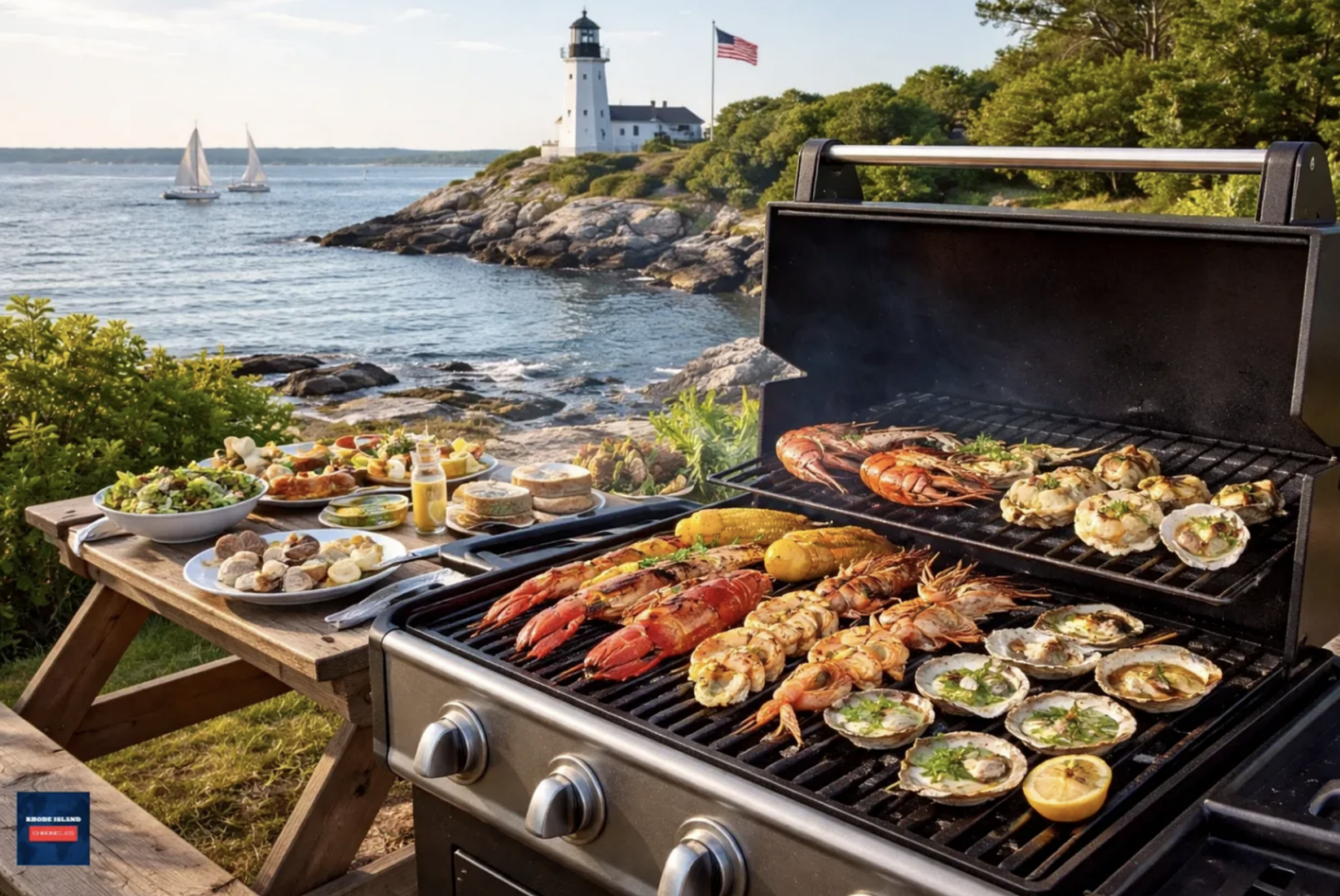
Imagine embarking on a culinary journey that brings the ocean’s bounty directly to your backyard grill. In Rhode Island, vibrant seafood and meat traditions offer a tantalizing promise of fresh, sustainable meals. The scent of salt fills the air as you walk along the docks, where the Atlantic Ocean’s bounty is freshly brought ashore. At Point Judith in Rhode Island, seafood profoundly shapes the state’s cultural identity. As a Providence resident, you likely recognize how this fishing heritage influences both the local economy and daily meals. But why does this matter to you?
The choices we make about seafood consumption can impact not only our personal health, through the benefits of omega-3 fatty acids and other nutrients, but also the well-being of our community and its traditions.
This article explores what Rhode Islanders eat in terms of fish, seafood, and meats, using recent data to provide a current perspective. Beyond the romance of the sea, the figures tell a complementary story, painting a detailed picture of dietary patterns. With statistics grounding our narrative, we delve into the specifics of consumption trends and regional peculiarities.
Imagine this: Rhode Island, the smallest state by land but a giant in maritime prowess, punches well above its weight in seafood. While precise per capita consumption figures for the state remain elusive, as national agencies like NOAA and USDA don’t always break it down that granularly, regional patterns tell a compelling tale. In the coastal Northeast, including Rhode Island, adults consume about 24.5 grams of seafood per day on average, roughly equivalent to one oyster or half a fish taco. According to a recent study by Errickson and colleagues, the annual per capita seafood consumption in the U.S. has shown notable trends in recent years. The national average of 19.7 pounds per capita in 2022 (the most recent NOAA data) was a slight dip from 20.5 pounds in 2021. (Fisheries of the United States 2022, n.d.)
Why the edge? People living close to the ocean, like those in Rhode Island, often have greater access to fresh seafood just minutes away, which encourages higher seafood consumption. Proximity to the sea fosters higher intake; coastal dwellers nationwide eat more seafood than inland folks, with New England leading the charge in species like clams, oysters, lobster, and squid. ‘Out here, seafood isn’t just dinner—it’s part of who we are,’ says local fisherman Tony Ruggiero. ‘Every catch connects us back to the deep history of these waters.’ (Fisheries, 2024)
Rhode Island’s story is one of abundance and appetite. According to NOAA Fisheries, U.S. commercial fishermen landed 8.4 billion pounds of seafood valued at $5.9 billion in 2022, which reflects a national decrease in landings and value compared with 2021. from 2020. (Annual Report 2021, n.d.) Standouts include longfin squid (14.7 million pounds), shortfin squid (24 million pounds), Atlantic sea scallops (2 million pounds), and American lobster (1.3 million pounds). (Rhode Island Annual Fisheries Report: 2023, n.d.) Yet consumption far outstrips local production, with Rhode Islanders consuming about 6 times as much seafood as the state produces, relying heavily on imports to meet demand. It’s like having six plates set at the table with only one caught locally.
This iconic struggle to match appetite with local abundance is driven by favorites such as quahogs (over 14.5 million pounds landed in 2021) and calamari, Rhode Island’s official state appetizer. The Rhode Island Department of Health recommends 2-3 weekly servings of low-mercury options for most adults. (Agency et al., n.d.) But what does this mean for your weekly menu? Consider incorporating quahogs and other low-mercury seafood into your meals a few times a week, embracing local flavors while adhering to these guidelines. Initiatives like the Local Food Count highlight spending: Rhode Islanders shell out about $234 million annually on local food, including seafood, underscoring a cultural love affair with the sea’s bounty. (Local Food Counts Study, 2022) As local fisherman Matt DiBiase puts it, ‘Every day we bring in the catch, it’s like bringing a piece of the ocean onto your plate. People here have a real connection to these waters—they aren’t just numbers to us, they’re our way of life.’ Such dedication breathes life into the statistics and showcases the commitment behind each seafood dish enjoyed in the Ocean State.
Shifting inland to the sizzle of grills and the aroma of barbecues, meats form another chapter in Rhode Island’s culinary narrative. Again, state-specific per capita data are sparse, but national trends provide a solid proxy, with Rhode Island aligning closely due to its urban, diverse population. In 2023, U.S. per capita meat consumption (retail weight) totaled around 221 pounds for red meats and poultry combined. This translates to roughly a half-pound burger each day, a stable figure amid fluctuating supplies. (Per Capita Meat Consumption – Inside Animal Ag, 2025)
Breaking it down further, Americans ate about 55.8 pounds of beef and 50.3 pounds of pork. For poultry, consumption included 100.5 pounds of broiler chicken, a record high, and 14.3 pounds of turkey. (USDA Agricultural Projections to 2033, n.d.) Projections for 2024 suggest slight increases in pork and poultry, while beef holds steady. (Williams et al., 2025)
Rhode Island’s meat scene reflects these norms, but with a twist: The state ranks fifth nationally in per capita food expenditures ($5,606 in 2024), signaling a willingness to invest in quality eats. According to the U.S. Bureau of Labor Statistics, in 2023, consumer units in the Northeast spent an average of $1,164 on meats, poultry, fish, and eggs. According to a report from the Rhode Island Coastal Resources Management Council, Rhode Island’s aquaculture industry saw its most successful year since 1995 in 2024, highlighting the state’s strong connection to seafood alongside its traditional meat consumption. If you’re in Providence, why not head to a local market for fresh quahogs or a sustainable steak?
For deeper dives, check NOAA Fisheries for seafood stats or USDA ERS for meat trends to keep your diet both delicious and informed. This week, try visiting the meat and fish markets and talk to the local vendors about the best cuts and freshest seafood on offer. Compare labels to make an informed choice and take home the best of Rhode Island’s ocean bounty.
As you savor these experiences, let the whispers of the seagull-filled docks accompany you, a reminder of the ocean bounty and your connection to these maritime traditions. With each bite, you bring a piece of Rhode Island’s flavorful heritage into your life—a delicious full-circle journey from the salty sea breeze to your plate.
Will you discover a new favorite among the ocean’s treasures or the land’s offerings? Your culinary adventure patiently awaits.
___
Sign up HERE for RINewsToday daily newsletter – and look for my column this SUNDAY!
Meet Chef Walter!
There is a constant, recognizable thread in the career of Walter Potenza to elevate the level of Italian culinary culture in the United States. Besides his unquestionable culinary talent and winning business perspective, Chef Walter has been a relentless educator with passion and knowledge who defeats stereotypes. His life, career, and values are a model, an example to follow by any chef of Italian gastronomy working outside Italy.
Chef Walter appears regularly on National and International Networks such as Food Network, ABC, CBS, NBC, RAI, FOX, and Publications such as NY. Times, Washington Post, Wall Street Journal, Food & Wine, Saveur, Gourmet, and several Italian media outlets. And now – RINewsToday!