
Subscribe!
Time to Rethink Football? New CTE Blood Test a Game Changer that Will be Hard to Ignore
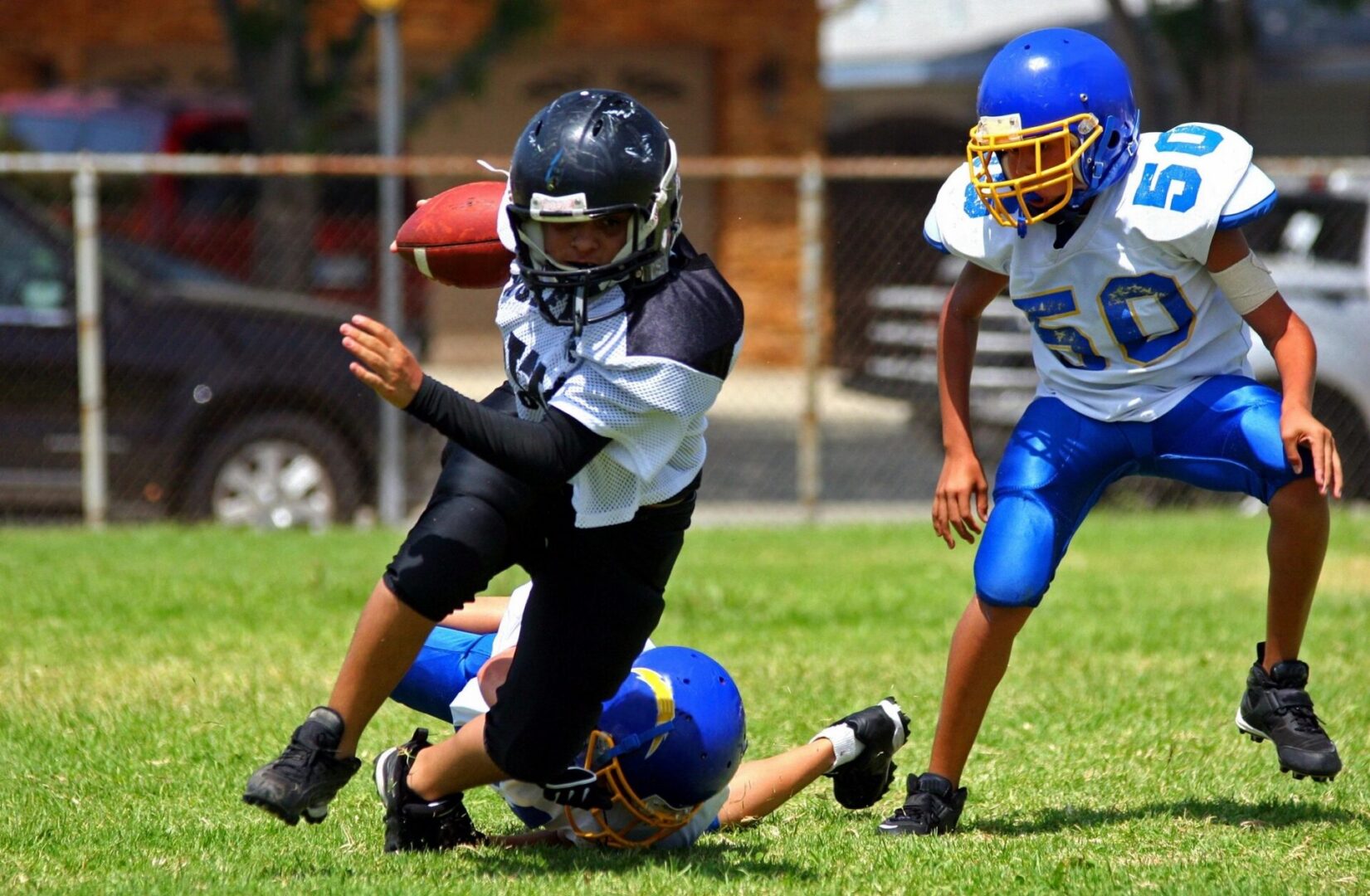
Researchers found signs of advanced CTE in blood drawn from former football players while they were alive. As Rhode Island heads into its Thanksgiving games, the discovery raises a question for families: Should tackling wait until high school?
For decades, a family seeking a definitive answer about chronic traumatic encephalopathy had to wait until after a loved one died. A new study from Boston University and Banner Health suggests some of the evidence may have been in the blood all along. Researchers found that blood drawn from former football players during their lives carried a signal associated with the tau tangles they would later see at autopsy. jamanetwork.com
What the blood showed
In the study, published Nov. 19 in JAMA, researchers compared blood samples from 21 former football players with findings from their donated brains. Eighteen had CTE, including 16 with advanced disease. Those with advanced CTE had higher levels of a protein fragment called eMTBR-tau. “This is a game changer,” said Michael Alosco, a co-senior author and co-director of clinical research at BU’s CTE Center. The study included just two early-stage cases, and an autopsy remains the only way to confirm the diagnosis. Read Boston University’s announcement. jamanetwork.com
Tau tangles also form in Alzheimer’s disease. In the BU study, the blood marker was highest in players whose brains showed both CTE and Alzheimer’s-related changes. The researchers measured a second marker, p-tau217, associated with Alzheimer’s, to see whether the two markers together might help tell the diseases apart. jamanetwork.com
There was news on that front this week in Boston, too. In a trial of the experimental Alzheimer’s drug diranersen, which reduces tau production, brain scans showed a drop in the signal associated with tau tangles. The trial missed its main goal, though two-year follow-up suggested slower decline. Whether a tau-lowering drug could help people with CTE remains unknown. A reliable blood marker could give researchers a way to track whether a future CTE treatment changes tau buildup during a patient’s lifetime. investors.biogen.com
Beyond football, what about hockey?
The new blood-test study involved former football players, and researchers still need to see whether the same marker can help detect CTE in former hockey players. In a separate 2024 Boston University study, researchers found CTE at autopsy in 18 of 19 former NHL players whose brains were donated for research. That sample can’t tell us how common CTE is across the NHL, but within the study group, longer playing careers were associated with higher odds of finding the disease. For families, that brings a familiar question to the rink: When should body checking begin? The American Academy of Pediatrics recommends limiting it to elite boys’ leagues starting no earlier than age 15. jamanetwork.com
Researchers have also confirmed CTE at autopsy in former rugby players, boxers, wrestlers and soccer players, including a 28-year-old woman who played Division I soccer. How common the disease is in each sport remains uncertain. A reliable blood test could help researchers study that question while athletes are still alive.
What football can change now
Separate research puts the stakes in perspective. A review found signs of CTE in less than 1% of 4,421 community brain donors. A BU-led study estimated that nearly 75% of former NFL players who died between 2008 and 2023 had signs of the disease. The lifetime risk for players who stop after high school is still unknown. What we can measure is how often children get hit. In a CDC study of players ages 6 to 14, those who played tackle took 15 times as many head impacts per practice or game as those who played flag. jamanetwork.com
California tried to phase out tackle football for children under 12. Some children showed up in full pads to oppose the bill. Gov. Gavin Newsom said he would veto it, and it died in the Assembly. Here in Rhode Island, the Shriners provided 30 Guardian Caps apiece to 36 public high schools this fall. Those padded covers fit over regular helmets. A Wisconsin study found no significant reduction in practice concussions among high school players who wore them, and their effect on long-term CTE risk remains unknown. Read RINewsToday’s coverage of the donation. news4sanantonio.com
On Thanksgiving morning, Cranston East and Cranston West will take the field. We can cheer for both teams and still rethink how kids get there. Let them play flag through middle school. Introduce tackle in high school, make Guardian Caps available and limit full-contact practice. A blood test could someday give families answers years sooner. We can give kids fewer years of hits now. www.nfhsnetwork.com
_
RINewsToday requested comment from OrthoRI and Rep. Joseph McNamara late on Saturday and comments will be added.
We are aware that this is a controversial issue hitting America’s favorite sport square in its timeline – and we welcome your thoughts – which can be left, below: