
Subscribe!
Wells in Coventry found to be Contaminated with PFAS – Rob Smith, ecoRI
By Rob Smith / ecoRI News staff – reprinted in partnership with ecoRI as members of RI News Collaborative
COVENTRY, R.I. — The state’s PFAS contamination crisis is expanding, as Rhode Island environmental officials recently disclosed dozens of wells surrounding Provident Place have been found to exceed the Department of Environmental Management’s limits.
Thirty-seven private drinking water wells have per- and polyfluoroalkyl substances levels that exceed the state’s 20 parts per trillion (ppt) drinking water standard, with results pending for another 16 wells. Ninety-one wells have been sampled so far within a quarter-mile of Central Coventry Park.
The streets with homes being tested include: Provident Place, Rock Hill Road, Windy Hill Lane, Arabian Drive, Shippee Plat Road, Raccoon Run Road, and Shippee Cove Road. Homes on Hill Farm Road north of Rock Hill Road, and on Phillips Hill Road north of Whaley Hollow Road, are also being tested.
A DEM spokesperson said the homes were being tested at no cost to homeowners through the department’s Emerging Contaminants in Small and Disadvantaged Communities grant, the same grant funding private well testing in Tiverton and other areas around the state.
“With this funding, DEM is providing for the installation of treatment systems for wells that exceed the State MCL [maximum contaminant level] at no cost to homeowners,” DEM spokesperson Evan LaCross said.
LaCross said the department hadn’t settled on a source for the PFAS, but that it “appears consistent with aqueous film-forming foam (AFFF).”
Per- and polyfluoroalkyl substances, also referred to as “forever chemicals” due to their inability to be easily broken down in nature, are a large family of human-made chemicals used in a wide variety of products, from ski and car waxes, to cosmetics, carpeting, artificial turf, and cookware.
The chemicals excel at making products stain-, grease- or water-resistant, but the substances can build up in the body leading to a number of health impacts, including high cholesterol and low fertility and infant birth weights. They also have been linked to kidney and liver cancer.
Their inability to be broken down in nature means PFAS can stay in groundwater supplies long after the specific source has been removed. The state recalled fire departments’ supplies of AFFF two years ago, but PFAS can often linger in the environment long after the source is gone.
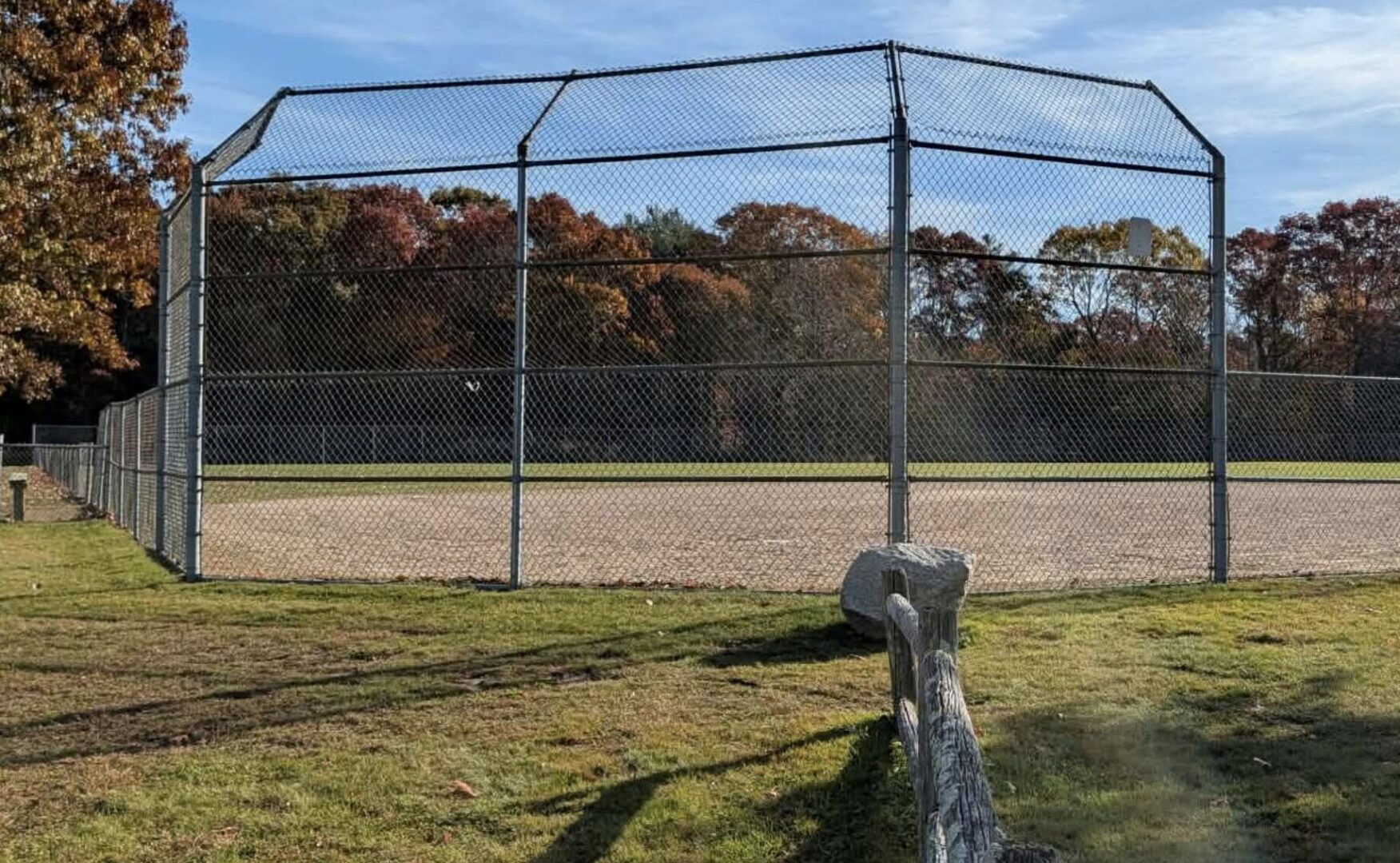
Central Coventry Park wasn’t always a park. During the Cold War it was Nike Missile Site PR-69, controlling ground-based radar and computer systems designed to detect hostile aircraft. The site was active between 1956 and 1974, when it was later turned over to the town.
The Coventry site was one of five Nike defense sites in Rhode Island, covering what was called the Providence Defense Area. Other sites were in North Kingstown, Foster, North Smithfield, and Bristol.
Formerly used defense sites (FUDS) were one of the sources of PFAS contamination cited by DEM officials in their 2024 source investigation report.
Central Coventry Park’s water system was part of a targeted sampling program undertaken by DEM to locate areas with significant PFAS contamination. Similar targeted testing was used to discover the ongoing PFAS contamination in Tiverton.
About 26% of Rhode Island’s population, and two-thirds of all municipalities, rely on groundwater wells to source their drinking water needs. The onus for testing water quality in private drinking wells is typically up to the homeowner.
At the Town Council’s Oct. 13 meeting, assistant town manager Maria Broadbent said her office had been in touch with DEM since they first discovered contaminated wells. The National Guard was working with Kent County Water Authority to install water mains along Reed Schoolhouse Road, not too far from the contamination area.
“The dream would be to have water lines everywhere where people have wells they need to worry about,” Broadbent said.
Broadbent encouraged residents to obtain funding for filtration systems from DEM before the grant money ran out.
Tiverton has been the poster child in Rhode Island for PFAS contamination in private wells. In June, DEM officials informed the town that dozens of homes surrounding Fire Station 3 on Crandall Road and Victory Church, using two surveilled water systems with high levels of PFAS, might be at risk for elevated levels of forever chemicals.
To date, 110 homes with private wells in Tiverton have tested for levels of PFAS exceeding the state’s 20 ppt standard. State officials have been performing the testing for PFAS at no cost to the homeowners, and earlier this autumn the dep