
Subscribe!
48 Hours to Act: Strait of Hormuz Crisis Reaches Breaking Point
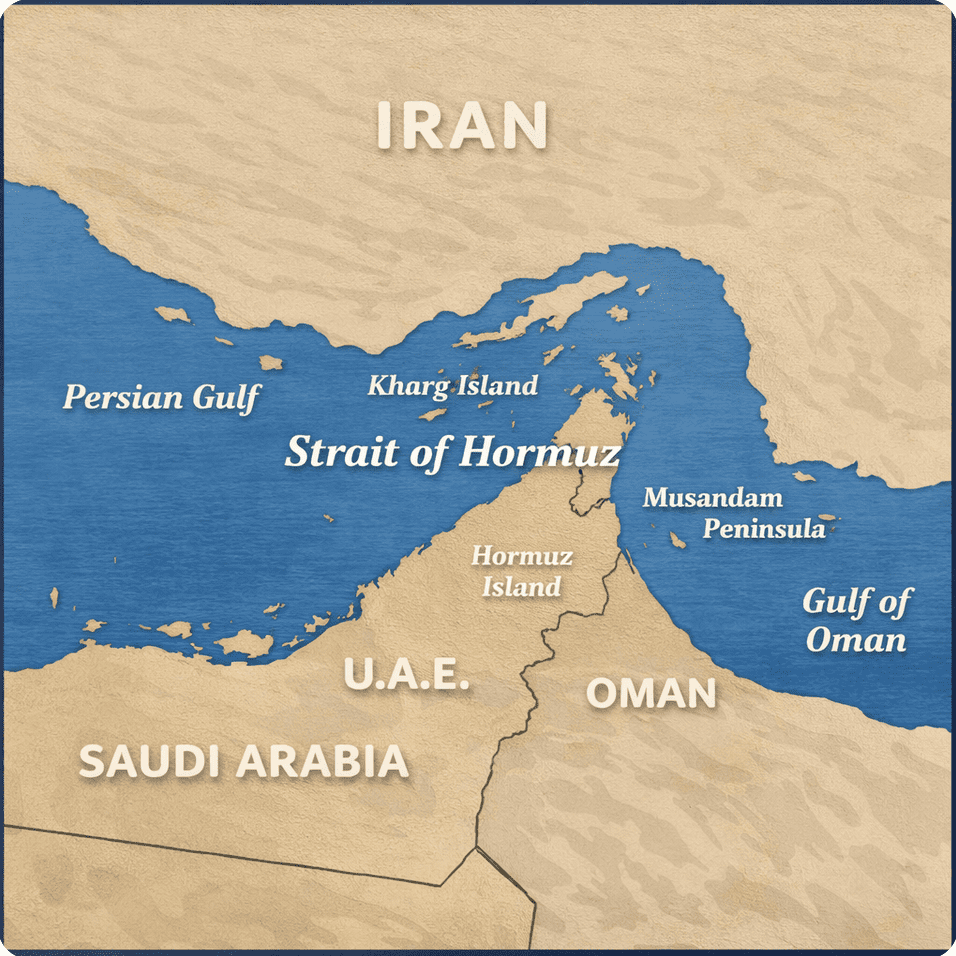
After 2–3 days of escalating attacks by Iran — and counterattacks — tensions have sharply intensified. The Strait of Hormuz remains too dangerous for normal navigation. A missile traveling more than 4,000 miles struck near Diego Garcia, underscoring Iran’s extended reach, including the potential to target sites deep into Europe. Meanwhile, strikes on Israel have left scores injured and dead.
Against this backdrop, President Trump issued a 48-hour ultimatum to Iran:
“If Iran doesn’t FULLY OPEN the Strait of Hormuz WITHOUT THREAT within 48 HOURS… the United States will hit and OBLITERATE their various POWER PLANTS, starting with the BIGGEST one first!”
U.S. Secretary of State Marco Rubio reinforced the warning:
“I hope what people now understand is that we have a president — the 47th President of the United States — who is not a game player. When he tells you that he’s going to do something… he means it. He acts on it.”
Part of the U.S. strategy appears to involve mixed messaging — signaling at times that the conflict may be nearing resolution, while also issuing stark warnings of overwhelming force. Iran has responded in kind, continuing missile launches, some reportedly striking unintended or neighboring areas.
Twenty-two countries have now indicated they will step up efforts to help secure and stabilize the Strait of Hormuz.
The U.S. has also eased sanctions on Iranian oil already in transit, a temporary move aimed at relieving immediate supply pressures. The measure applies only to shipments currently underway.
The U.S. is simultaneously working to ease supply pressure for the country by reopening pipeline capacity in California.
Iran, for its part, has threatened to strike desalination infrastructure across the Middle East if U.S. attacks target its power grid — a move that could have significant humanitarian consequences in water-dependent regions.
At the same time, reporting from Axios indicates the President Trump team is centered on the demand that six key conditions be met— within the same 48-hour window:
The proposed U.S. framework includes:
- No missile program for five years
→ A halt to development of ballistic missile capabilities - Zero uranium enrichment
→ No enrichment at any level - Decommissioning key nuclear sites
→ Facilities at Natanz, Isfahan, and Fordow taken offline - Strict international monitoring
→ Oversight of centrifuges and nuclear systems - Regional arms limits
→ Missile caps across the region, with a ceiling of 1,000 - End support for proxy groups
→ No funding for Hezbollah, the Houthis, or Hamas
With a 48-hour clock now ticking, the situation sits on a razor’s edge — where a single decision could reopen one of the world’s most critical shipping lanes or push the region, and global markets, into a far broader and more dangerous conflict. With newly demonstrated long-range missile capabilities, the stakes could not be higher — and as with all moments on the brink of war, a decision point seems to have arrived.